
Fake Napkins Are Real Risks: Bangladesh Needs Safer and Affordable Menstrual Products Options
A sanitary pad is not a luxury. For millions of women and girls, it is a basic menstrual health product that can determine whether they attend school, go to work or move through daily life with comfort and dignity.
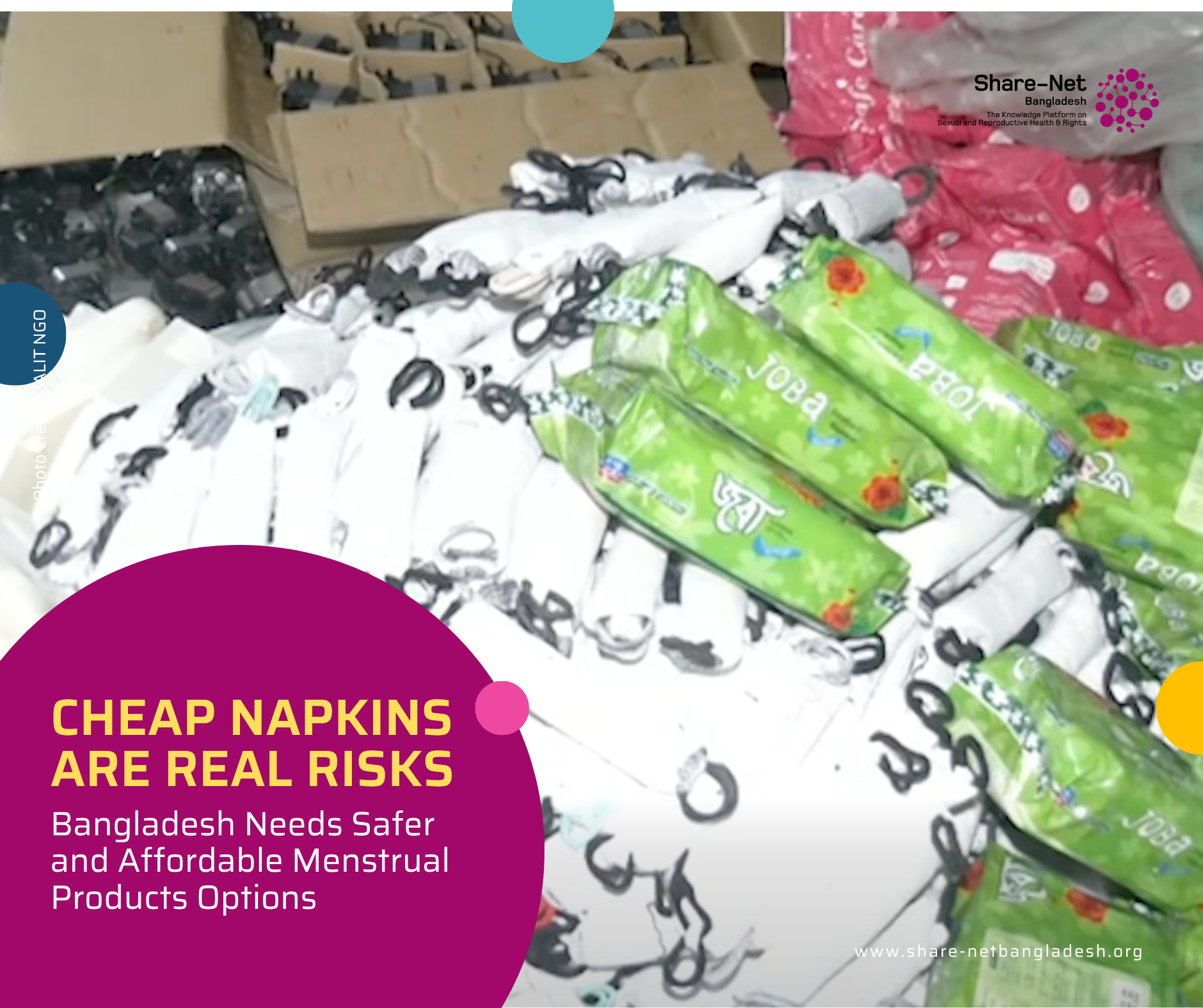
That is why the recent discovery of an unauthorised production operation in Bogura is deeply concerning. During a joint operation on August 16, 2026, authorities found sanitary napkins and surgical products being produced in an unhygienic home-based facility. The sanitary napkins reportedly used very low-quality cotton and ordinary tissue paper. The operation was fined Tk 2 lakh and the production area was sealed. Authorities also found misleading manufacturing information on the packaging.
The incident raises a bigger question: when menstrual products are already difficult for some families to afford, how easily can unsafe products win customers simply by being cheaper?
Current retail prices show a wide gap. Online listings in Bangladesh show basic disposable pads selling from around Tk 32 to Tk 180 or more per pack, depending on brand, size and quantity. Premium products can cost considerably more. A 2025 WaterAid market landscape study similarly found disposable pad prices ranging broadly from Tk 35 to more than Tk 1,000, depending on product type and pack size.
For a low-income household, repeated monthly spending matters. That creates a market for products promising to do the same job for less money. But a lower price should never mean lower safety.
UNICEF notes that people who menstruate need quality menstrual hygiene products to manage periods safely and with dignity. It also recognises reusable pads as a legitimate alternative to disposable products when they are properly designed, washed and dried.
This is where Bangladesh could look beyond the simple debate of “cheap versus expensive”.
Safe, washable reusable pads, including locally made options, deserve greater attention. UNICEF has supported reusable-pad production and training in Cox’s Bazar, showing that reusable menstrual products can address hygiene needs while also creating skills and livelihood opportunities.
However, “homemade” should not automatically mean “safe”. Reusable products need appropriate absorbent materials, secure stitching, proper washing, complete drying and hygienic storage. UNICEF also stresses the importance of clean water, soap and private drying spaces.
The real solution, therefore, is not simply to tell consumers to buy expensive branded products. Bangladesh needs stronger quality control, transparent labelling, affordable safe products, better menstrual health education and wider promotion of properly made reusable alternatives.
Periods are already surrounded by enough stigma. No girl or woman should also have to wonder whether the product she can afford is safe.
Affordable menstrual health is important. Safe menstrual health is non-negotiable.
