
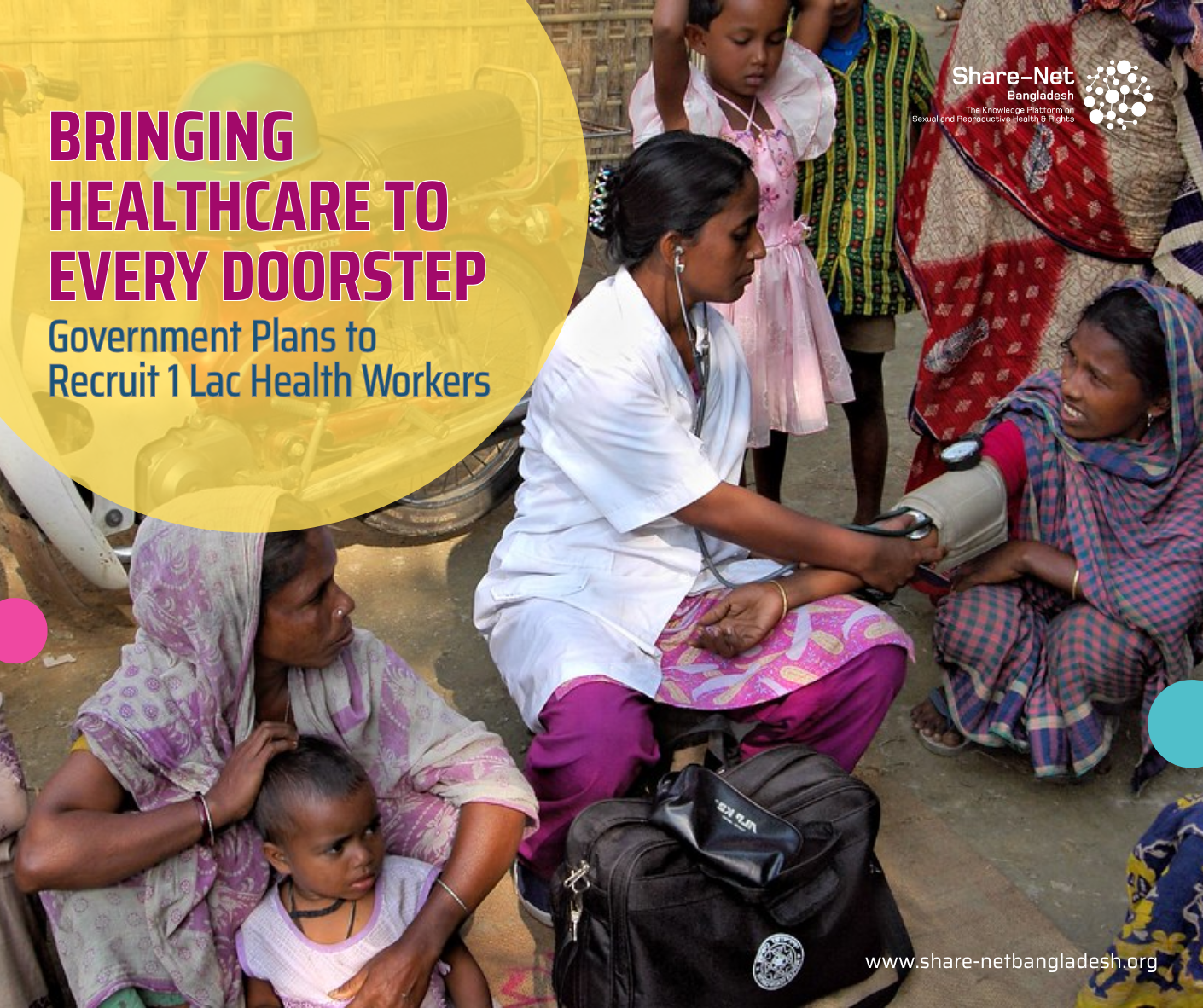
Bringing Healthcare to Every Doorstep: Government Plans to Recruit 1 Lac Health Workers
A healthcare system is only as strong as its ability to reach people before illness becomes a crisis. For millions of people in Bangladesh, particularly women, adolescents and underserved communities, the nearest health facility is not always accessible, affordable or equipped to address their needs. Sometimes, the biggest barrier is not the absence of a hospital, but the absence of someone who can provide reliable health information, identify risks and connect people with essential services.
The government’s plan to recruit nearly 100,000 health workers over the next three years could offer an opportunity to change this reality. But beyond the impressive recruitment target lies a more important question: can a larger grassroots workforce deliver better healthcare, particularly sexual and reproductive health and rights (SRHR)?
According to a report published by The Daily Star on October 31, 2026, the government plans to establish 99,657 new health and wellbeing assistant positions. These workers will be integrated with existing health assistants, family welfare assistants and community health care providers (CHCPs), creating a combined workforce of approximately 150,000. The proposed system will operate through health and wellbeing centres at union and city ward levels.
The plan seeks to address a longstanding problem: fragmented healthcare delivery. Currently, health assistants primarily handle vaccination, family welfare assistants distribute contraceptives, while CHCPs provide basic medicines and services through community clinics. Bringing these services under a coordinated structure could reduce duplication and improve access, particularly for people who rarely visit formal health facilities.
The implications for SRHR are particularly significant. Family welfare assistants already play an important role in contraceptive distribution and family planning outreach. With appropriate training, the expanded workforce could strengthen counselling, menstrual health awareness, maternal health referrals, adolescent-friendly information and access to modern contraceptive services.
However, the need remains substantial. According to the United Nations Population Fund (UNFPA), Bangladesh’s maternal mortality ratio stood at 115 deaths per 100,000 live births in 2023. Skilled health personnel attended approximately 70 percent of births during 2004-2024. Meanwhile, the country’s unmet need for family planning was estimated at 8 percent among women aged 15-49 in 2025. These figures underline why expanding access must go beyond increasing staff numbers.
The World Health Organization’s 2024 health workforce profile for Bangladesh also reported only 13.9 doctors, nurses and midwives per 10,000 people in 2023. The figure highlights the country’s broader human resource constraints and the importance of strengthening primary healthcare.
Yet, recruitment alone cannot guarantee better outcomes. The proposed system raises questions about professional responsibilities, training standards, accountability, fair employment conditions and coordination between departments. Existing health worker associations have also expressed concerns about the integration process, particularly the lack of consultation and differences in qualifications and service structures.
Another critical consideration is gender. The government’s stated commitment to recruit 80 percent women could strengthen access for women and adolescent girls, especially when discussing sensitive SRHR concerns. But female representation must come with adequate training, safe working conditions, supervision and institutional support.
Ultimately, the success of this initiative should not be measured by how many people receive appointment letters. It should be measured by whether a rural adolescent can access accurate reproductive health information, whether a woman can obtain contraceptive counselling without stigma, and whether families receive timely referrals when complications arise.
Bangladesh has an opportunity to bring healthcare closer to its people. The real challenge is ensuring that this expanded workforce delivers not just more services, but better, equitable and rights-based healthcare.
