
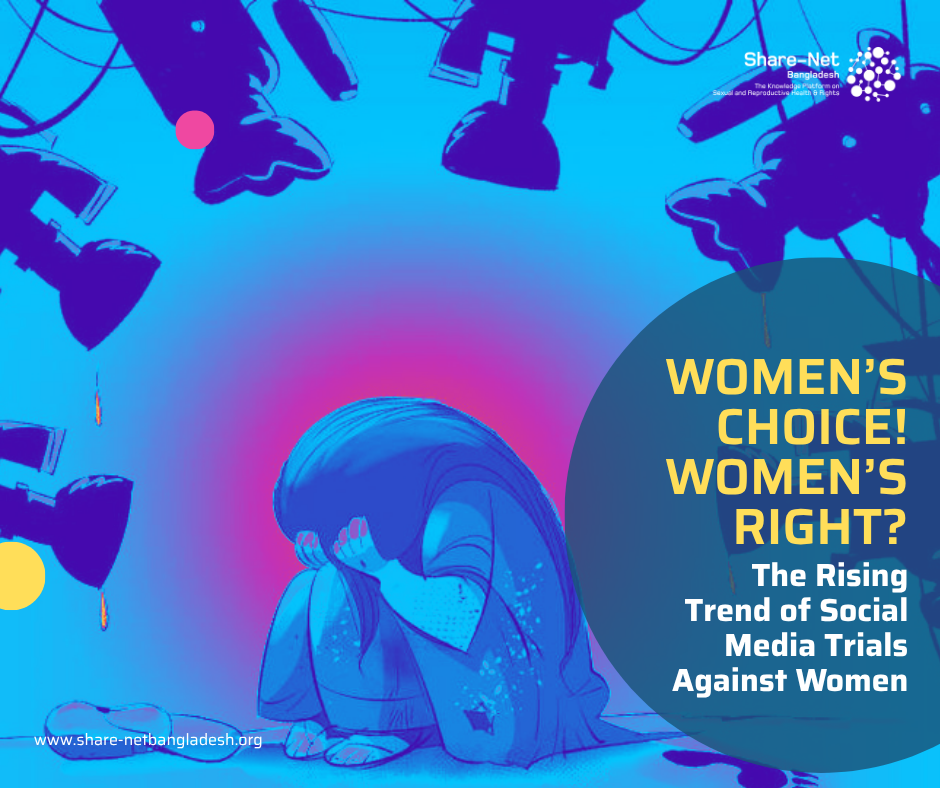
Women’s Choice! Women’s Right? The Rising Trend of Social Media Trials Against Women
A woman’s clothing, beliefs or personal decisions should not determine whether she deserves respect. Yet online, women can face public ridicule for choices that others consider either too conservative or too liberal.
A woman wearing a veil may be mocked for being “backward”. Others wearing Western-style clothing may be subjected to slut-shaming. One may be criticised for expressing religious beliefs; another for challenging social expectations. The judgements appear to come from opposing sides but share a troubling pattern: women are expected to live by someone else’s standards, and those who do not comply risk public humiliation.
Social media has made it easier to share opinions, expose misconduct and demand accountability. But it can also turn disagreement into a public trial, where screenshots, assumptions and personal attacks spread faster than verified facts. A post can invite thousands of strangers to judge a woman’s character before she has a fair chance to respond.
The consequences go beyond reputation. Online harassment can undermine confidence, affect mental well-being and discourage women from participating in public debate, education and professional life. The threat of becoming the next target may lead some to stay silent—not because they have nothing to say, but because speaking carries a social cost.
The evidence is concerning. A 2025 study using data from Bangladesh’s nationally representative Adolescent Health and Wellbeing Survey found that 8% of adolescent girls surveyed had experienced cyberbullying in the previous 12 months. Among girls who reported cyberbullying, 31% had major depressive disorder, compared with a lower proportion among those who had not experienced it. The study found an association, not proof, that cyberbullying alone caused depression.
A UNICEF Bangladesh poll in 2025, involving nearly 29,000 young people, also identified misinformation as a leading social-media stressor: two in three respondents cited it as a major concern. Bullying and negative comments were also reported as sources of distress.
These findings do not mean that every criticism is harassment or that women’s views should be beyond question. Legitimate concerns about harmful conduct deserve to be heard and investigated. But criticism of an action is different from humiliating someone for her appearance, clothing, beliefs or identity. Accountability requires evidence, proportionate responses and a fair process—not online punishment driven by outrage.
The principle should be consistent: a woman who chooses to wear a veil deserves the same dignity as one who chooses not to. Neither choice should invite bullying, coercion or assumptions about her character. Respecting women’s autonomy does not require everyone to agree; it requires recognising their right to make personal choices without intimidation.
The real question is not whether society approves of a woman’s choice, but whether she is free to make it. Social media should create a space for debate, not become a courtroom where women’s dignity is decided by a crowd.