
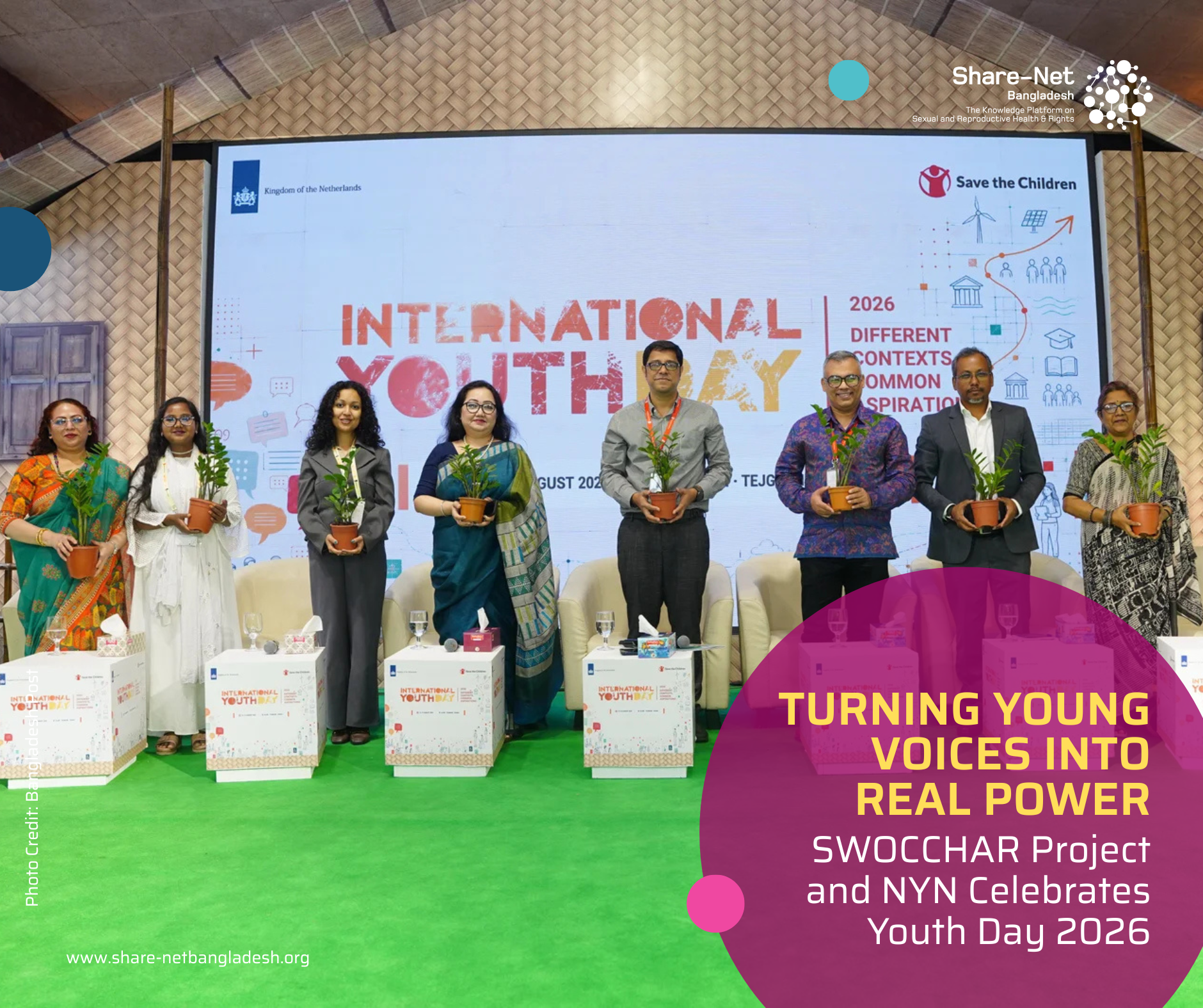
Turning Young Voices into Real Power: SWOCCHAR Project and NYN Celebrates Youth Day 2026
A youth celebration can be inspiring. But its real value is measured by what happens after the stage is cleared. If young people leave with applause but without skills, opportunities, services or a meaningful place in decision-making, the celebration risks becoming just another event. International Youth Day 2026 in Bangladesh put that question at the centre of a two-day programme focused on youth leadership, economic empowerment, skills and rights.
Save the Children in Bangladesh, with support from the SWOCCHAR Project and the National Youth Network, organised the two-day celebration on 12 and 13 August. The programme brought together youth representatives from all eight divisions, government officials, development partners, private-sector representatives, women-led organisations and media. The event was designed to amplify youth voices, particularly around young women’s leadership and economic empowerment.
The opening ceremony featured Prof. Dr A Z M Zahid Hossain, Minister for Women and Children Affairs and Social Welfare, as Chief Guest. Jaouad Azaoui, First Secretary of the Embassy of the Kingdom of the Netherlands, and Professor Shamsad Mortuza, Vice Chancellor of the University of Liberal Arts Bangladesh, also joined with special remarks. Save the Children Bangladesh Country Director Suman Sengupta was also among the key participants.
Speaking at the event, Minister Zahid highlighted the government’s Tk 500 crore startup fund and encouraged young people to develop technical and vocational skills and become entrepreneurs. He described young people as the “core strength” for building Bangladesh’s future.
The message is relevant to a country where the transition from education to decent work remains difficult. The World Bank reported in 2025 that half of Bangladeshi youth aged 15 to 29 were working in low-paying jobs, while one in five young women remained unemployed. (World Bank) A separate World Bank programme has also shown that targeted apprenticeships can produce strong employment outcomes, with more than 80 percent of RAISE graduates securing employment within three months. (World Bank)
The second day moved beyond speeches through the “Pathshala Corner”, where young participants joined six thematic workshops covering climate change and green development, STEM education, skills development, SRHR and safe digital spaces. They later developed campaign plans based on their chosen topics.
The second day of the International Youth Day 2026 celebration also brought together several important voices from development and international partners. Among the notable participants were Mr. Md. Aminul Haque, Honourable State Minister, Ministry of Youth and Sports, as Chief Guest, with Dr. Zahed Ur Rahman, Advisor on Policy and Strategy, Prime Minister’s Office, as Special Guest. The session also brought together Mr. Syed Rashed Al-Zayed, Senior Economist, World Bank; Mr. Md. Ashiq Iqbal, Social Policy & Economic Specialist, UNICEF; Ms. Bitopi Das Chowdhury, Country Head, Corporate Affairs, Brand & Marketing, Standard Chartered Bank Bangladesh; and Farhia Tabassum Hoque, Senior Manager, Entrepreneurship Programmes, YY Ventures, among other speakers. The dialogue concluded, with Ms. Mushfiqua Zaman Satiar, Senior Policy Advisor, SRHR & Gender, Embassy of the Kingdom of the Netherlands, delivering the vote of thanks.
The SRHR component deserves particular attention. Youth empowerment cannot be separated from the right to accurate health information and youth-friendly services. UNICEF reports that 48.3 percent of women aged 15 to 49 in Bangladesh used the internet in the previous three months, while only 37.6 percent of women aged 15 to 24 had at least one ICT skill. (UNICEF) Meanwhile, Bangladesh continues to face substantial adolescent health challenges, making accessible and reliable SRHR information particularly important.
The event therefore offered a useful model: connect economic opportunity with leadership, digital literacy, safe spaces and SRHR. The bigger challenge now is implementation. Youth participation should not end with a workshop or campaign plan. It should lead to stronger services, better policies and a genuine role for young people in shaping the decisions that affect their lives.
Source: