
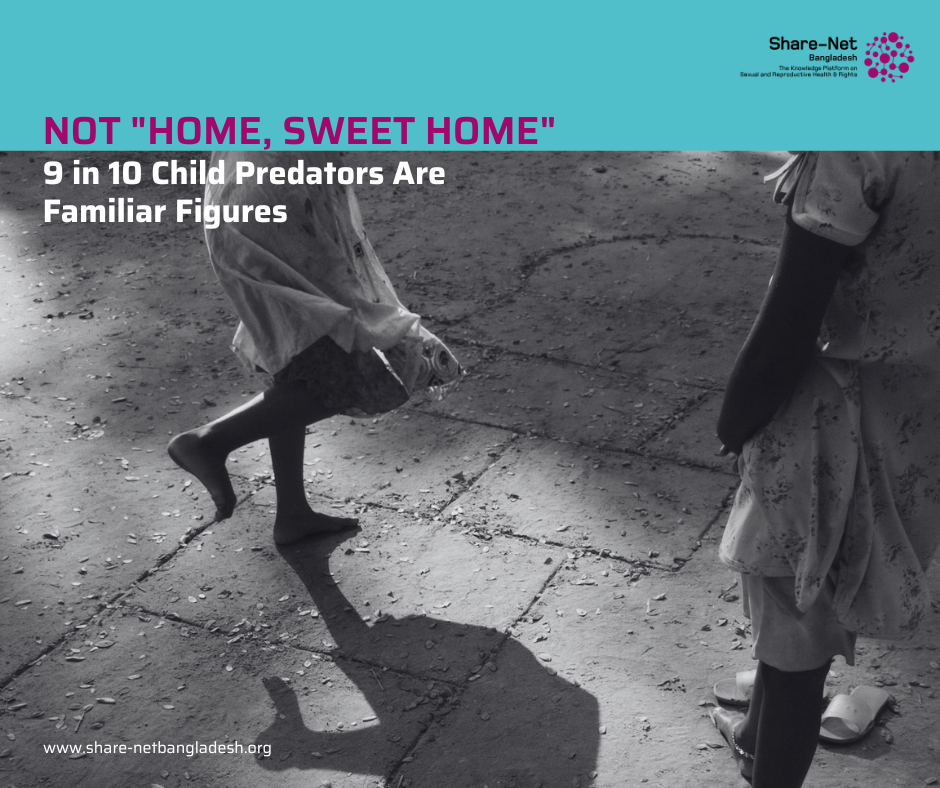
Not “Home, Sweet Home”: 9 in 10 Child Predators Are Familiar Figures
Parents often teach children to be careful around strangers. Yet emerging evidence from Bangladesh suggests a far more uncomfortable reality. For many children, the greatest threat does not come from unfamiliar faces on the street, but from people they already know and trust.
Recent data reveal a troubling pattern. In the overwhelming majority of child sexual abuse and violence cases, the perpetrators are family members, relatives, neighbours, teachers, or other familiar figures. Strangers account for less than 10 percent of reported incidents. Even more concerning, many of these crimes take place within homes and family environments, spaces that are traditionally considered safe.
The findings point to a child protection crisis that goes far beyond individual criminal acts. They expose deeper social, institutional, and cultural failures that continue to place children at risk.
According to child rights advocates, familiarity often gives perpetrators easier access to children and reduces suspicion. As child rights campaigner Laila Khondkar observed, “Children are mostly abused by known figures who exploit easy access when children are unsupervised.”
The data also highlight the extreme vulnerability of younger children. Reports show that a significant proportion of rape victims are between the ages of 0 and 12. Experts say younger children are often less able to recognise abuse, communicate what happened, or seek help.
The consequences extend far beyond the immediate crime. Sexual violence against children is closely linked to long-term Sexual and Reproductive Health and Rights (SRHR) concerns, including trauma, unwanted pregnancy, sexually transmitted infections, mental health disorders, and lifelong barriers to education and social participation.
Criminologists warn that some offenders go even further by attempting to eliminate evidence after committing sexual violence. “They try to hide the evidence, and in doing so, many victims are killed because they are the primary witness,” said criminologist Sumaiya Iqbal. Such incidents reveal not only individual brutality but also a broader culture of impunity.
Experts argue that weak accountability remains one of the biggest obstacles to child protection. Despite numerous reported cases, very few result in convictions. This gap between crime and justice fuels public distrust and undermines deterrence.
Sociologists also point to structural factors. Patriarchal attitudes, gender inequality, online exploitation, and the normalisation of sexual objectification all contribute to an environment where violence can persist. Economic stress and social frustration may further increase the vulnerability of children, who are often perceived as easy targets.
Mental health specialists warn that the damage spreads far beyond victims. Communities exposed to repeated incidents experience fear, anxiety, and a growing sense of insecurity. Children who hear about such cases may develop trauma and withdrawal, while families become increasingly fearful about everyday interactions.
The lesson emerging from these findings is both simple and difficult. Child protection cannot focus only on external threats. It must also address risks within families, communities, and institutions.
Protecting children requires more than stronger laws. It demands faster justice, child-sensitive services, comprehensive sexuality education, community vigilance, and open conversations about consent, safety, and bodily autonomy.
The greatest challenge may be acknowledging an uncomfortable truth: sometimes the people children trust most are the very people from whom they need protection. Until that reality is confronted, the cycle of violence is unlikely to end.
