
Learn Your Self-care Interventions: BRAC JPGSPH Launches Study on Reproductive Health Self-care
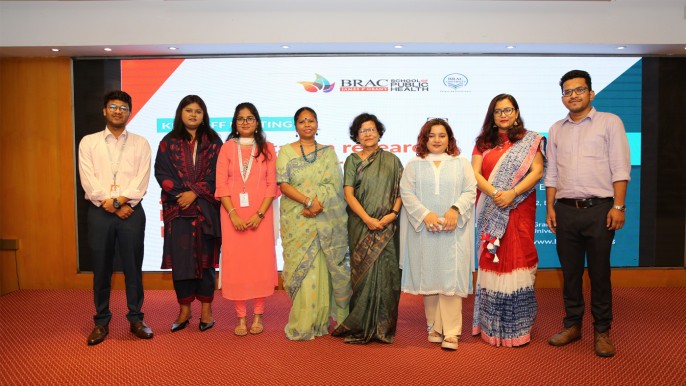
BRAC James P Grant School of Public Health of BRAC University hosted the kick-off event for an implementation research study on self-care interventions for sexual and reproductive health and rights at a hotel in Dhaka on Thursday, 23 April.
The study is supported by the World Health Organization and the HRP UNDP/UNFPA/Unicef/WHO/World Bank Special Programme of Research, Development and Research Training in Human Reproduction.
Led by BRAC James P Grant School of Public Health, the study will examine how oral contraceptive pills and emergency contraceptive pills can be strengthened as self-care interventions to improve access, utilisation and sexual and reproductive health outcomes, particularly for underserved and vulnerable populations in Bangladesh.
The study aims to understand context-specific factors that enable or hinder access to oral contraceptive pills and emergency contraceptive pills among vulnerable groups.
Professor Dr Kaosar Afsana, lead of the Humanitarian Hub at BRAC James P Grant School of Public Health, is leading the project with her team.
Representatives from the government, international and national organisations, civil society and academia attended the event. Senior officials from the Directorate General of Family Planning and the Directorate General of Health Services were also present.
Director General of the Directorate General of Family Planning Dr Ashrafi Ahmad attended the event as chief guest. Director of the MCH Services Unit of the Directorate General of Family Planning Dr Nasir Ahmed, Director of PHC at the Directorate General of Health Services Dr Sayed Kamrul Islam, and WHO Deputy Representative to Bangladesh Dr Rajesh Narwal attended as special guests.
Speaking at the event, Dr Ashrafi Ahmad said that despite limited government funding, people are still accessing oral and emergency contraceptive pills, and understanding these access pathways is essential for the health system to support self-care.
She said the study was timely and could generate important evidence to improve public understanding of family planning services.
Dr Nasir Ahmed said counselling has weakened as many people now obtain contraceptives directly from pharmacies. He stressed the need to ensure that users receive proper instructions on safe and appropriate use.
Dr Sayed Kamrul Islam said user choice is a cornerstone of sexual and reproductive health services, adding that implementation research should inform real-world policy and programming.
Dr Rajesh Narwal said there remains a gap between policy and implementation, which the study could help address. He called for collaborative efforts to ensure that findings from Bangladesh translate into improvements in the health system.
Professor Dr Sameena Chowdhury and Professor Dr Farhana Dewan, both past presidents of the Obstetrical and Gynaecological Society of Bangladesh, highlighted the need for proper awareness and counselling on contraceptive use.
Other discussants also stressed the importance of understanding discontinuation, gender dynamics, community needs and access barriers in reproductive health self-care.
Closing the event, Dr Kaosar Afsana said sexual and reproductive health self-care remains neglected in Bangladesh, and the study could open avenues for further research with different communities.