
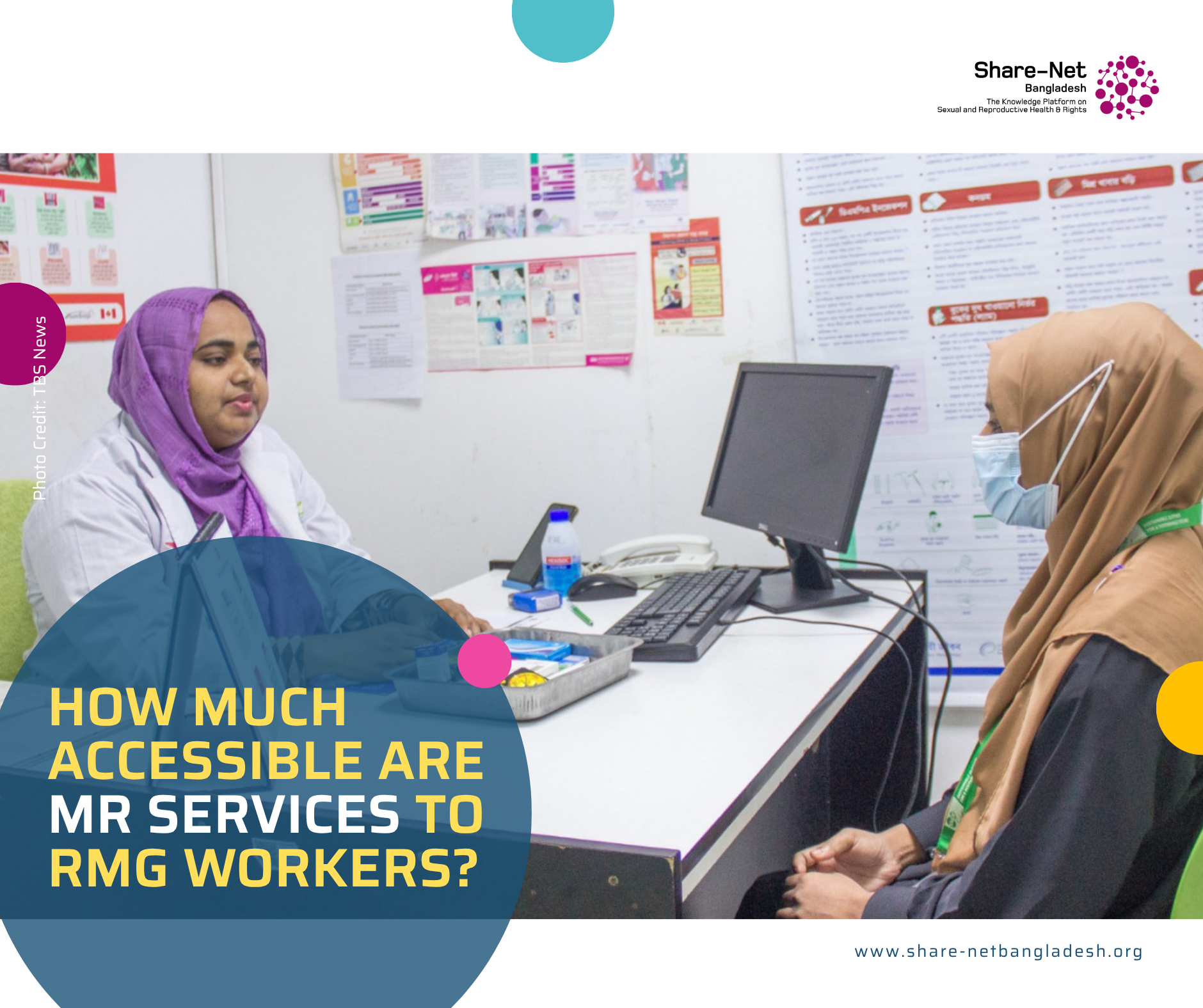
How Much Accessible Are MR Services to Garment Workers?
Approximately 1.73 million to 2.3 million women work in Bangladesh’s ready-made garment (RMG) sector, making up roughly 52% to 55% of the total workforce of 3.3 million to 4.4 million. For these women working in RMGs, finding time to access reproductive healthcare is difficult. Long working hours, limited time outside work and the stigma surrounding services such as Menstrual Regulation (MR) can make an already sensitive healthcare need even harder to address.
What happens when that care is brought closer to where women spend most of their day?
For the first time, doctors at project-supported garment factory clinics in Gazipur and Narayanganj began providing Menstrual Regulation (MR) services to women workers. The initiative was supported through the Improving Sexual and Reproductive Health and Rights in Dhaka (ISRHRD) project, which strengthened the capacity of doctors through training and helped ensure access to the commodities required to provide MR services.
The intervention was introduced across around 15 RMG factory outpatient clinics. These clinics were strengthened to provide a wider range of reproductive healthcare, including family planning, MR, post-MR care and services related to gender-based violence. Referral linkages were also established between factories and other healthcare facilities so that workers needing further care could be referred and continue their treatment.
The number of people accessing these services shows why availability matters. Between 2021 and 2026, 16,865 clients received MR services, while 32,517 clients received post-MR care through the project. These figures represent a substantial demand for reproductive healthcare and highlight the importance of making services accessible to women who may otherwise face practical difficulties in reaching a facility.
But access to MR is not only about having medicines or a clinic room. A service is only as accessible as the people available to provide it.
To address this, the project trained 766 service providers and 296 community health workers on MR, post-MR care, family planning and sexual and gender-based violence services. The training aimed to strengthen quality, rights-based and stigma-free service delivery.
Yet the wider health system continues to face a workforce challenge. According to the project, recruitment has remained very limited for the past three to four years, while experienced health workers have retired or left the system. At the same time, many newly recruited staff have not received adequate SRHR training.
This workforce gap matters for services such as MR, where trained providers, appropriate counselling, quality care and effective referral systems are essential. Even when commodities are available, shortages of skilled and trained personnel can limit how consistently services are delivered.
The experience of these garment factory clinics shows the value of bringing reproductive healthcare into the workplace. For women workers, it can mean fewer barriers between needing care and actually receiving it.
But sustaining this progress will require more than a project-based intervention. Reliable commodities, adequate staffing, trained providers and functional referral systems are all necessary to ensure that MR services remain available and accessible.
For garment workers, reproductive healthcare should not have to compete with the demands of earning a living. When essential services are brought within reach, the workplace can become not only a place to work, but also a place where women can access the healthcare they need.
