
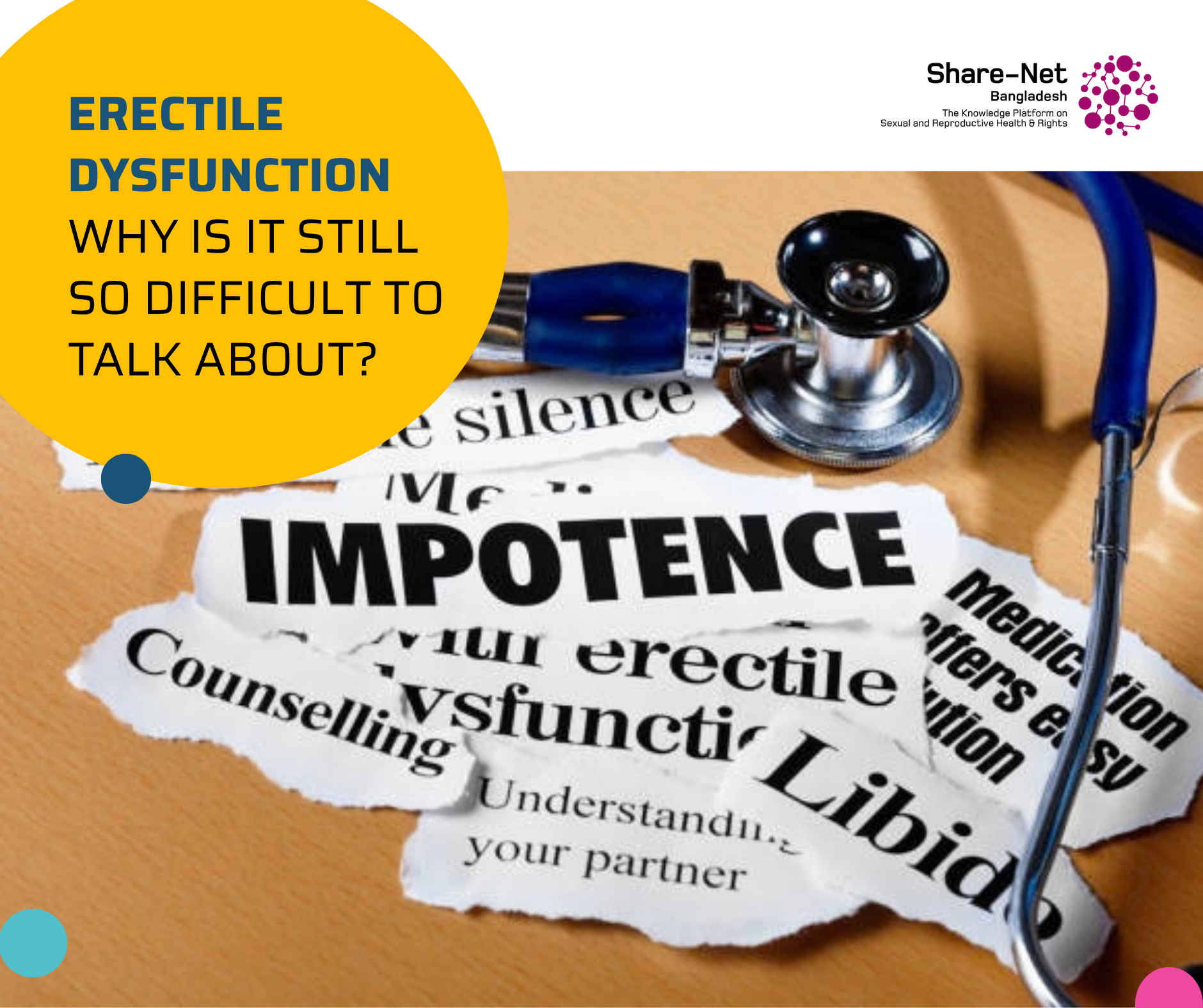
Erectile Dysfunction: Why Is It Still So Difficult to Talk About?
What happens when a health problem becomes too embarrassing to even name? For many men, Erectile Dysfunction (ED) is not only a sexual health concern—it can become a source of shame, anxiety and silence. In societies where sexual performance is often closely tied to ideas of masculinity, seeking help can feel difficult. But ED is a medical condition, not a measure of a man’s worth or masculinity.
Erectile Dysfunction means having persistent difficulty getting or keeping an erection firm enough for sexual activity. Having erection difficulties occasionally is common and does not necessarily mean someone has ED. However, when the problem happens repeatedly and becomes distressing, it deserves attention.
ED is not simply a problem of sexual performance. An erection depends on the coordinated functioning of the brain, hormones, nerves, muscles and blood vessels. Problems affecting any of these systems can contribute to ED. Conditions such as diabetes, high blood pressure, heart disease, high cholesterol and obesity, as well as smoking, excessive alcohol use, certain medicines and injuries, can play a role. Stress, anxiety, depression and relationship difficulties can also cause or worsen the problem. Often, physical and psychological factors exist together.
This is why ED should not simply be dismissed as “getting older.” Although the likelihood of ED increases with age, ageing itself does not inevitably cause it. In some cases, persistent erection problems may also be an early sign of an underlying health condition, including cardiovascular disease. Addressing the underlying cause can therefore benefit not only sexual health but overall well-being.
Yet embarrassment can keep men from seeking care. Fear of judgement, misinformation and pressure to appear sexually capable may encourage some to remain silent or turn to unverified medicines and supplements.
Talking about ED should not be a source of shame. A healthcare professional can assess possible physical and emotional causes and discuss appropriate treatment. Depending on the cause, management may include lifestyle changes, treatment of underlying conditions, counselling or prescribed medicines and other medical options. Men should not stop or change prescribed medicines without consulting a healthcare professional.
Sexual and reproductive health includes the right to seek accurate information, appropriate healthcare and support without stigma. Making conversations about men’s sexual health more open can help replace shame with knowledge—and silence with care.
https://www.urologyhealth.org/urology-a-z/e/erectile-dysfunction-(ed)
https://www.mayoclinic.org/diseases-conditions/erectile-dysfunction/symptoms-causes/syc-20355776