
Strengthening Organisational Resilience: Preparing for Emergencies and Changes
Strong programmes need strong organisations behind them. But when an emergency disrupts operations, a key person becomes unavailable or leadership suddenly changes, how prepared are organisations to keep their commitments, protect their people and continue their work?
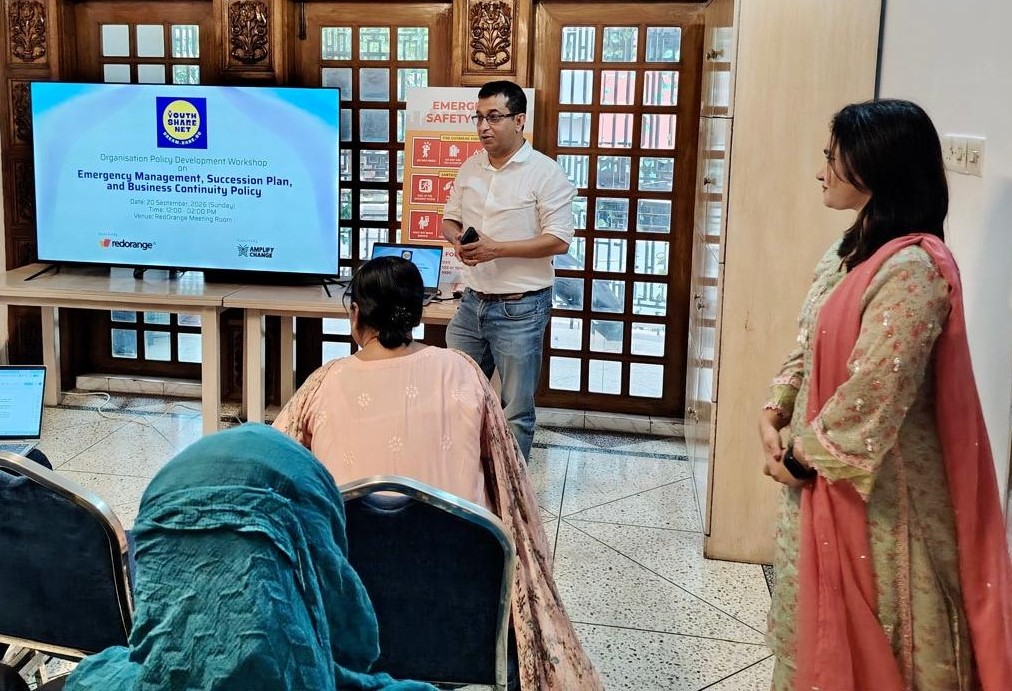
Recognising that organisational resilience is essential to sustainable development work, RedOrange organised an Organisational Policy Development Workshop for their internal staff under the Youth Share-Net Project, supported by the AmplifyChange Networking Grant. It marks a deliberate step to future-proof RedOrange’s operations against disruption- whether from natural disasters, security incidents, or sudden leadership gaps.
A key focus of the workshop was the Business Continuity, Succession and Emergency Management Policy developed by RedOrange. The framework brings together three closely connected areas: ensuring critical operations can continue during disruption, maintaining continuity of leadership and critical responsibilities and establishing clear procedures for responding to emergencies affecting people, premises, systems and operations.
The sessions highlighted the importance of keeping critical operations running even when unexpected disruptions occur. Discussions also covered critical positions, backup or acting arrangements, handover requirements, and access to key information- all aimed at reducing disruption during leadership or staffing changes. Participants were reminded of the need to be prepared for emergencies such as fires, earthquakes, and power disruptions, including knowing the location of fire extinguishers, emergency exits and understanding evacuation procedures.
Importantly, the workshop was designed as a participatory process rather than a one-way policy briefing. Through presentations, plenary discussions, Q&A and facilitated group discussions, participants examined the proposed arrangements, discussed organisational risks, reviewed critical functions and positions and considered the roles and responsibilities required during emergencies and organisational transitions. Their feedback contributed to finalising the policies and strengthening shared ownership of the frameworks.
The workshop contributes directly to organisational growth, strengthening and sustainability while supporting stronger approaches to accountability and safeguarding in line with international best practices.