
Bangladesh’s Fertility Reversal: What Does It Mean for Women and Married Girls?
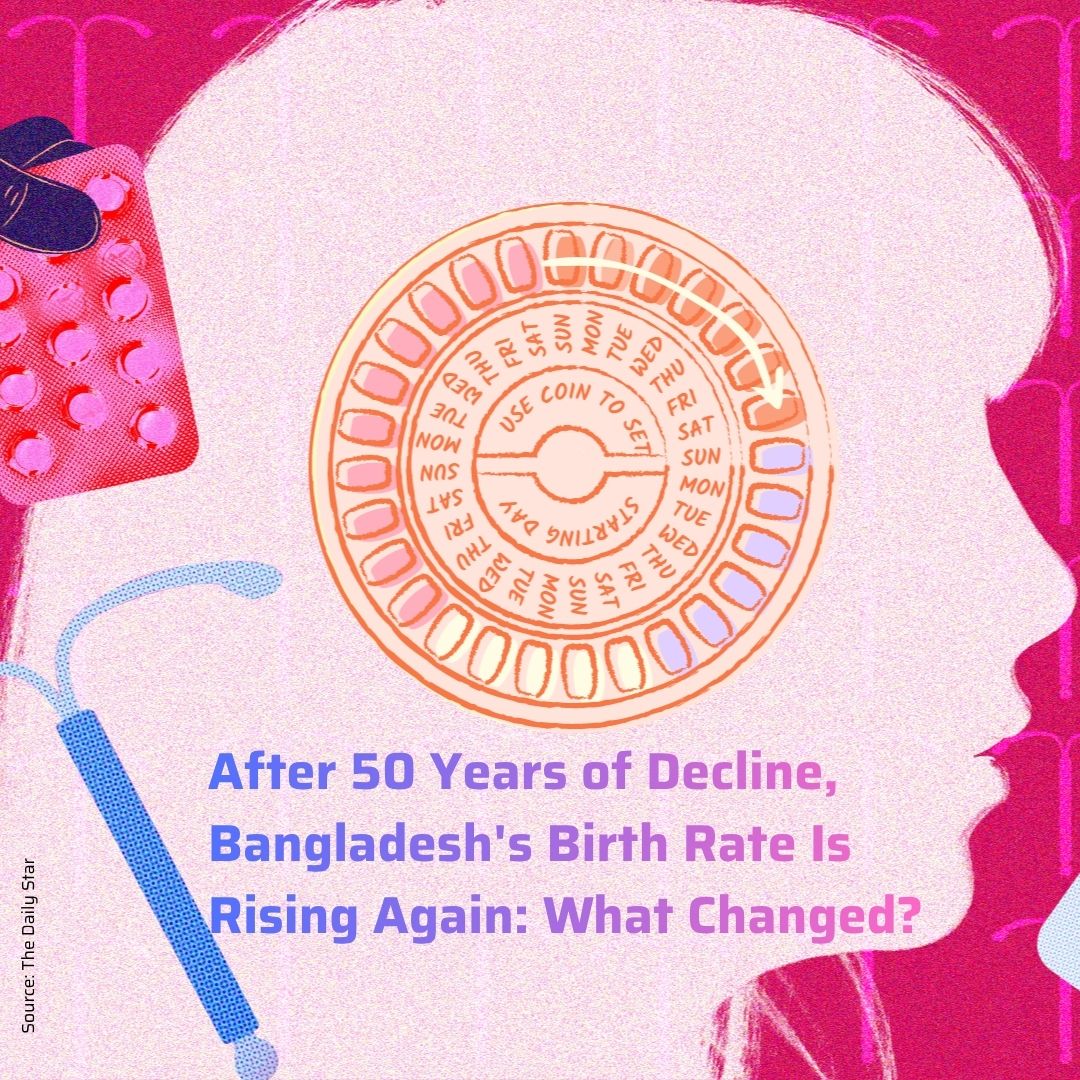
Bangladesh’s rising fertility rate should be a wake-up call for policymakers. After falling from 6.3 in 1975 to 2.3 in 2022, the country’s Total Fertility Rate (TFR) has now increased to 2.4, according to the Multiple Indicator Cluster Survey 2025. While the increase may appear small, the reversal is worrying and could affect the country’s health, economy, education and development.
The increase in fertility comes alongside reduced access to family planning. Contraceptive use among married women has fallen from 62.7 percent in 2019 to 58.2 percent, while women’s needs met through modern methods have declined from 77.4 percent to 73.5 percent.
For adolescent girls, the situation is particularly concerning. Child marriage remains high at 56 percent, while the share of girls aged 15-19 who have already had children has risen from 83 percent in 2019 to 92 percent. Early marriage and teenage childbearing limit girls’ choices and contribute to higher fertility.
Bangladesh has already shown that sustained investment in health can deliver results. Institutional deliveries have risen to 71 percent, skilled birth attendance to 77 percent, while under-five mortality has fallen to 33 per 1,000 live births.
The same commitment is now needed for family planning. The government must strengthen contraceptive supplies, rebuild community outreach and prevent child marriage, while ensuring adolescent girls stay in school and have access to accurate SRHR information.
Bangladesh has made remarkable progress in reducing fertility. The current rise should not undo those gains. It should be a reminder that family planning is not only about population management, rather it is about health, rights, choice and the future of families.
Source: The Daily Star