
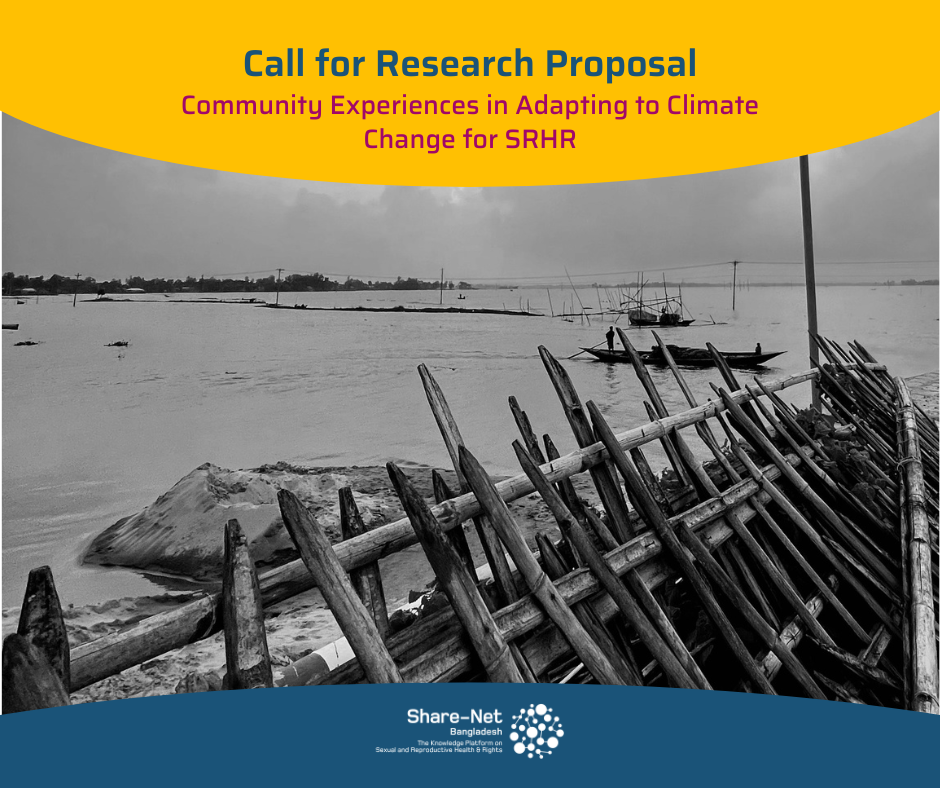
Call for Research Proposal: Community Experiences in Adapting to Climate Change for SRHR
As climate change intensifies across vulnerable regions like Bangladesh, its hidden toll on sexual and reproductive health and rights (SRHR) is becoming harder to ignore. A new global call for research proposals is now placing community voices at the centre of this crisis—seeking evidence on how people adapt, survive, and respond to climate-driven health risks.
Issued by the World Health Organization’s Human Reproduction Programme (HRP), in collaboration with UNDP, UNFPA, UNICEF, and the World Bank, the call invites researchers to explore how climate shocks intersect with maternal health, gender-based violence, contraception, and abortion care.
The urgency is clear. Climate change is already disrupting health systems and daily life. According to global estimates, extreme weather events affect over 3.6 billion people living in highly climate-vulnerable settings. In Bangladesh, rising temperatures, floods, and cyclones are linked to increased maternal health risks and limited access to reproductive health services.
The call highlights a stark reality: “Climate change is one of the most serious threats to global health in the twenty-first century.” Yet, despite growing awareness, critical gaps remain—especially around contraception, abortion care, and broader sexual health.
Another key concern is inequality. The call stresses that “evidence is especially sparse for studies applying an intersectional lens”—meaning research often overlooks how factors like gender, age, disability, and poverty combine to shape SRHR outcomes during climate crises. For example, adolescent girls in flood-prone مناطق may face higher risks of early marriage or sexual violence, while women with disabilities may struggle to access essential reproductive health services during disasters.
This is where the new research call stands out. It shifts the focus from top-down solutions to community-driven evidence. As the document puts it, “communities most affected by climate change are best placed to define, study and help address the problems they face.” This approach aligns closely with Bangladesh’s growing emphasis on locally led adaptation and youth-led SRHR advocacy.
The initiative also responds to policy gaps. While some countries have included SRHR in their climate adaptation plans, “none addresses SRHR comprehensively.” This disconnect between policy and lived reality is particularly relevant for Bangladesh, where climate adaptation strategies often overlook reproductive health needs.
With a submission deadline of 12 April 2026, the call encourages participatory and mixed-method research—prioritising voices from frontline communities. For researchers, NGOs, and youth-led organisations working in SRHR, this is a timely opportunity to shape global evidence and influence policy.
In a world where climate change is no longer a distant threat, this call reframes the conversation: adaptation is not just about infrastructure or environment—it is also about rights, dignity, and access to essential sexual and reproductive health services.
For more details, please visit – World Health Organization
