
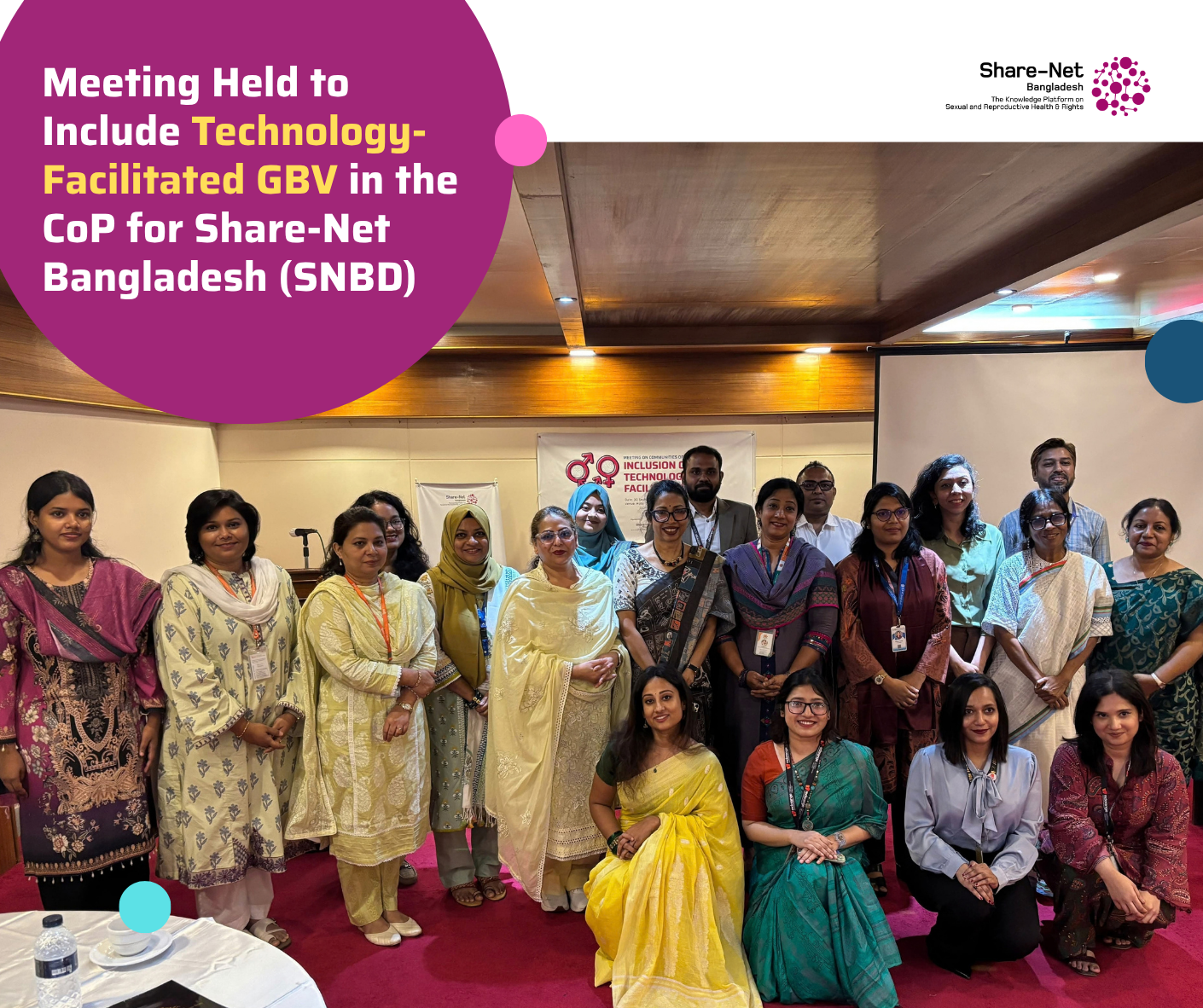
Meeting Held to Include Technology-Facilitated GBV in the CoP for Share-Net Bangladesh (SNBD)
Technology-facilitated gender-based violence (TGBV) is an increasingly important concern as digital platforms become part of everyday life. According to the 2024 National Violence Against Women Survey by the Bangladesh Bureau of Statistics (BBS), with support from UNFPA, more than 8% of women with access to technology experienced forms of TGBV, including unwanted sexual communications, sexual blackmail, image-based abuse, and technology-facilitated controlling behaviour during their lifetime. More than 5% experienced such violence in the previous year.
Recognising the need for stronger evidence, collaboration, and coordinated action, Share-Net Bangladesh (SNBD) convened a Community of Practice (CoP) meeting on Technology-Facilitated Gender-Based Violence (TGBV) on 30 September 2026 in Dhaka. The meeting was organised by Red Orange Limited and supported by the Embassy of the Kingdom of the Netherlands (EKN).
The meeting brought together organisations working on sexual and reproductive health and rights (SRHR), gender-based violence (GBV), and TGBV. Representatives from the Acid Survivors Foundation, Democracy International, Ipas Bangladesh, JAAGO Foundation, Manusher Jonno Foundation, Plan International, Save the Children, SERAC Bangladesh, ToguMogu, UN Women Bangladesh, and Youth Policy Forum shared their insights on Technology-Facilitated Gender-Based Violence (TGBV), its emerging challenges, prevention, survivor-centered responses, and the importance of evidence-informed action.
Participants discussed how TGBV takes different forms and can have serious mental, sexual and physical health impacts. They highlighted digital surveillance. The discussion also pointed to gaps and loopholes in existing cybersecurity laws and the need for stronger legal responses. Participants stressed the importance of digital literacy and greater awareness among boys and young men on TGBV, while survivors are often blamed, shamed and left without adequate support from families and society. They also emphasised the need for a survivor-centred approach across response systems.
We need better collaboration within relevant government ministries and agencies, which can enable effective responses to TGBV. Participants called for stronger youth-focused coordination among government, law enforcement, technology platforms, civil society organisations, media and other stakeholders. In the closing speech, Senior Policy Advisor (Gender and Civil Society) of the Embassy of the Kingdom of the Netherlands, Ms. Mushfiqua Zaman Satiar, emphasised that efforts must extend beyond the national level to grassroots communities, where awareness, prevention, reporting, and survivor support need to be strengthened.
Members of the CoP will carry these discussions forward and guide the upcoming National SRHR Knowledge Fair 2026, helping bring TGBV and related SRHR concerns into a wider national knowledge-sharing platform. Through this collective effort, SNBD aims to move beyond recognising TGBV as an emerging concern and support evidence, advocacy, and practical responses to technology-facilitated violence.