
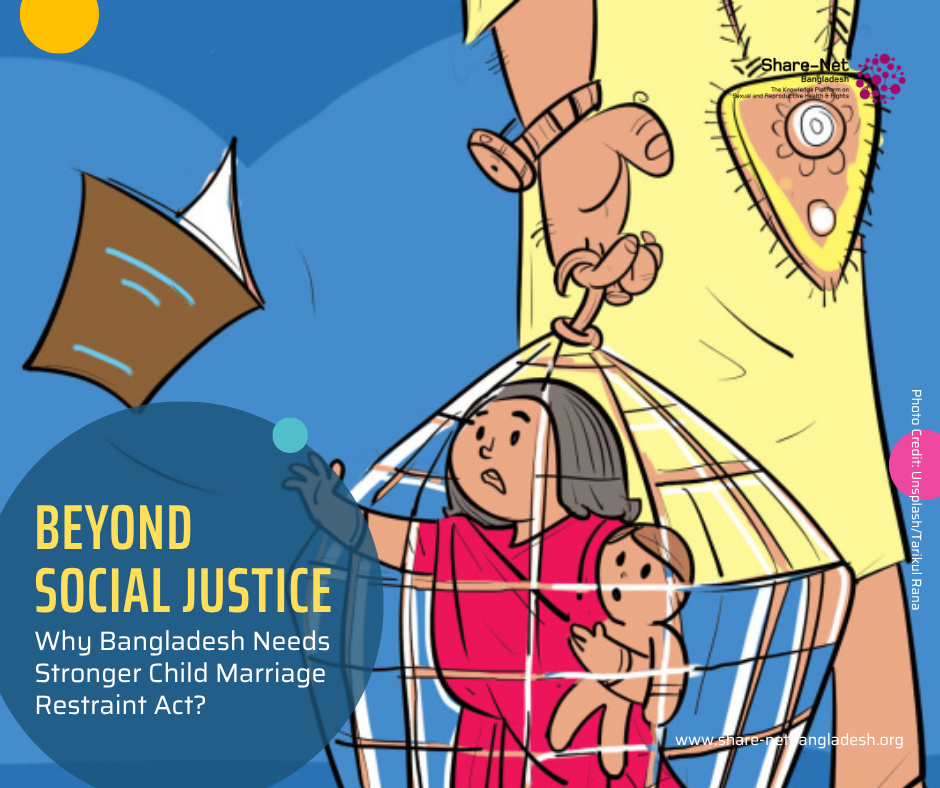
Beyond Social Justice: Why Bangladesh Needs Stronger Child Marriage Restraint Act?
What protection does a law offer when child marriage is punishable, but a child may remain legally married without an effective way out?
Nearly a decade after the Child Marriage Restraint Act, 2017 was enacted, this contradiction remains a serious gap in Bangladesh’s child protection framework. Those responsible for child marriage may face punishment, yet the marriage itself can retain legal recognition, leaving children without an effective route to seek annulment.
A UNICEF–UNFPA review highlights the scale of the challenge. According to the 2025 Multiple Indicator Cluster Survey, 47.2 percent of women aged 20–24 were married before turning 18, down from 51.4 percent in 2019. Despite this progress, child marriage remains widespread.
A major concern is Section 19, which allows underage marriage under special circumstances with judicial approval. Its ambiguity risks weakening the law’s protective purpose, particularly where poverty, family pressure and social stigma shape decisions. UNICEF and UNFPA recommend removing this exception.
The law also permits penalties against minors themselves, while offering no straightforward, effective route for children to challenge their marriages. Meanwhile, the minimum marriage age remains unequal: 18 for females and 21 for males. Reform should remove the exception, Legal remedies must be backed by legal aid, safe accommodation and financial and psychosocial support.
However, stronger laws alone cannot end child marriage. Educational exclusion and financial hardship can make early marriage seem unavoidable. UNICEF education indicators show that 33.9 percent of upper-secondary-school-age children are out of school, while the completion rate stands at 43.9 percent. Keeping girls in education through targeted stipends, safe transport and opportunities to return to school must therefore be central to prevention.
The reproductive health consequences are equally concerning. The UNICEF–UNFPA review reports that the adolescent birth rate rose from 83 to 92 births per 1,000 girls aged 15–19 between 2019 and 2025. Early marriage can restrict bodily autonomy, threaten health and limit girls’ ability to make informed decisions about their futures. Accessible, adolescent-friendly sexual and reproductive health services are essential to addressing these risks.
Ending child marriage requires more than punishment. Bangladesh must close legal loopholes, ensure survivor-centred protection and make girls’ education a policy priority. Ultimately, a law should be judged not only by the marriages it criminalises, but by how effectively it protects children’s rights and enables them to shape their own futures.
Sources:
