
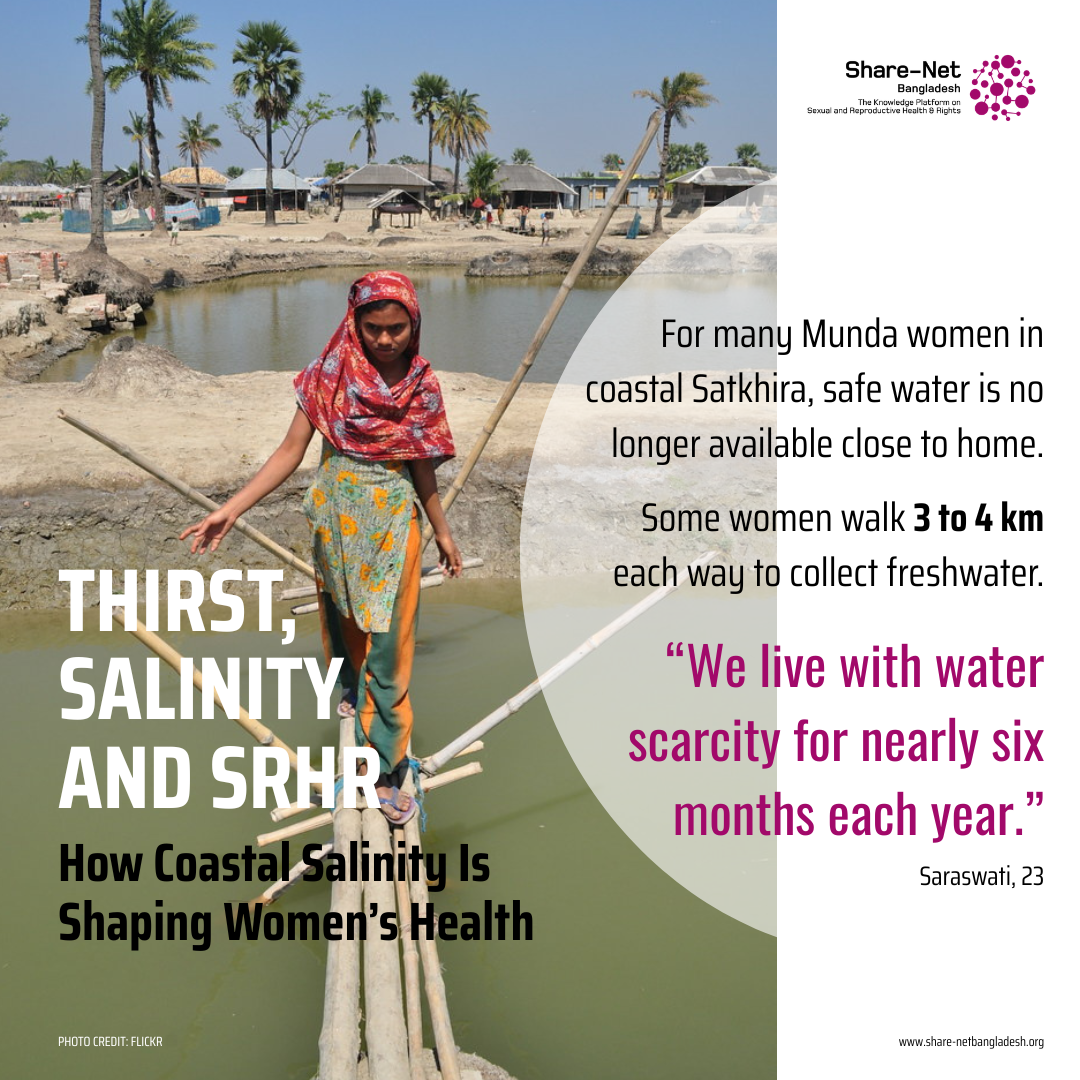
Thirst, Salinity and SRHR: How Coastal Salinity Is Shaping Women’s Health
-

- WHEN WATER BECOMES A DAILY JOURNEY
-
- WHEN FRESHWATER TURNS SALTY
A water crisis is rarely just about water. In coastal Bangladesh, a woman walking several kilometres to collect drinking water is also losing time, energy, privacy and, potentially, access to healthcare and education. For indigenous Munda communities living around the Sundarbans, salinity is increasingly turning an everyday necessity into a question of dignity and rights.
The situation described in Shyamnagar and the surrounding coastal areas deserves attention because its consequences extend well beyond drinking water. Women and adolescent girls often carry the main responsibility for collecting household water. When freshwater sources become unusable, the burden grows, particularly during the dry season.
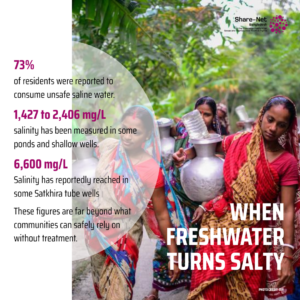
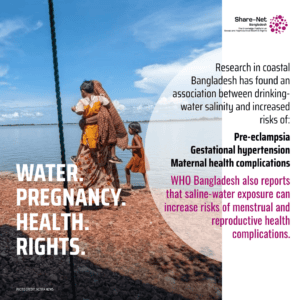
The scale of salinity is already well documented. A World Bank study found that drinking-water salinity in coastal Bangladesh is associated with health risks for women and children, while another World Bank analysis found that coastal salinity is linked with higher risks of miscarriage, gestational hypertension and pre-eclampsia among pregnant women.
This makes freshwater access an SRHR concern. Safe water is essential for menstrual hygiene, pregnancy care, childbirth, personal hygiene and infection prevention. It also affects whether women can reach health facilities, attend school or participate in paid work. In 2026, the World Health Organization in Bangladesh similarly warned that saline water exposure in coastal communities can increase risks involving menstrual and reproductive health, alongside other health problems.
-
- WATER. PREGNANCY. HEALTH. RIGHTS.
-
- SO, WHO GETS TO DECIDE?
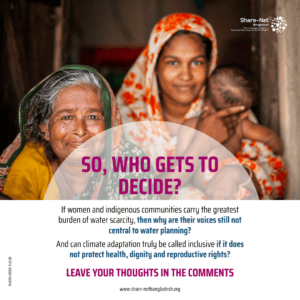
The numbers in the reported Munda communities are therefore more than environmental indicators. The source describes women travelling three to four kilometres each way for water, while some households reportedly face scarcity for nearly six months a year. Such a routine can quietly become a form of inequality: the poorer and more socially excluded a household is, the fewer alternatives it may have.
There are solutions, including rainwater harvesting, filtration systems and larger community storage. But infrastructure alone may not be enough. The key question is who decides where these systems are built, who maintains them and whose needs are prioritised.
The World Bank has repeatedly highlighted the growing health and livelihood risks from coastal salinity, while its recent research continues to show that salinity is affecting food security and child health in southwest Bangladesh.
The phrase from the community, “water is life”, therefore carries a deeper meaning. For Munda women, access to safe water is also about bodily dignity, health, opportunity and choice.
Climate adaptation cannot be truly inclusive if women and indigenous communities remain absent from water governance. The real test is not simply whether Bangladesh can build more water infrastructure. It is whether those most affected can help decide what is built, where it goes and how it serves their lives.