
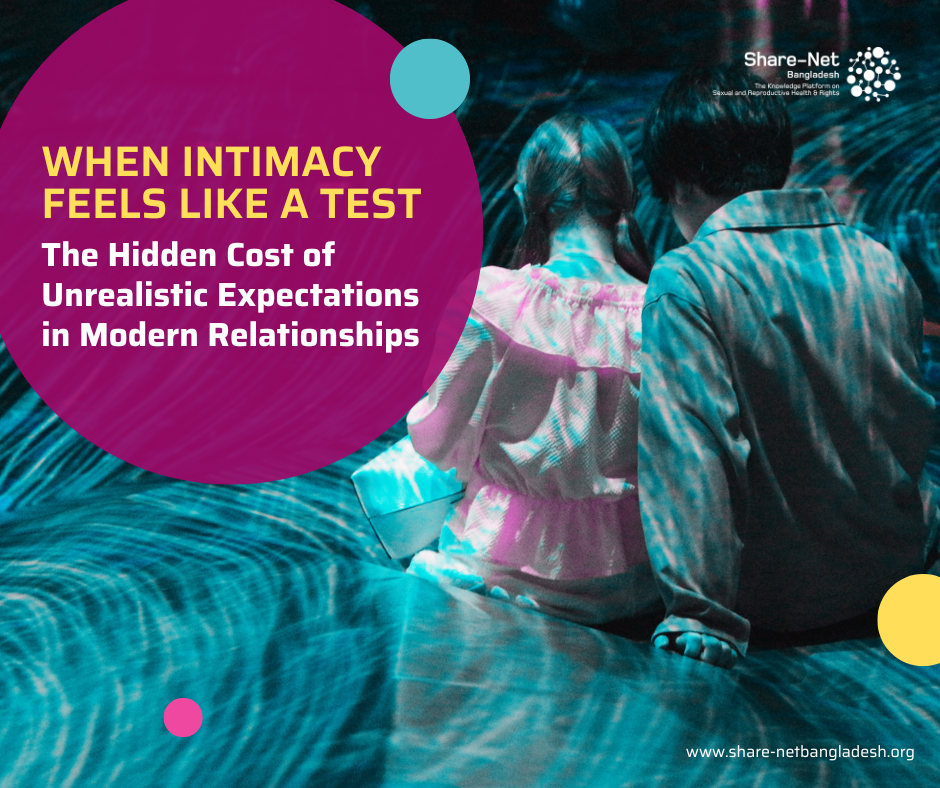
When Intimacy Feels Like a Test: The Hidden Cost of Unrealistic Expectations in Modern Relationships
Modern society celebrates confidence in almost every aspect of life. Yet, when it comes to intimacy, confidence often disappears behind closed doors. Many people silently struggle with performance anxiety, believing they are alone or somehow “not enough.” In reality, the issue is far more common than most imagine, and treating it as a personal weakness only makes the problem worse.
As one powerful message suggests, “Confidence rarely returns through pressure. It grows when both people feel accepted, respected and free to communicate.” That idea reflects a growing understanding within Sexual and Reproductive Health and Rights (SRHR): healthy relationships are built on trust, not perfection.
Performance anxiety refers to persistent worry about sexual performance that interferes with intimacy. It affects people across different ages, genders, and relationship stages. While it is often discussed in relation to men, research shows that anxiety about intimacy also affects women and people of diverse gender identities, influencing desire, satisfaction, and emotional wellbeing.
Studies published by the American Psychological Association and the International Society for Sexual Medicine suggest that stress, depression, relationship conflict, body image concerns, unrealistic expectations, and fear of failure are among the leading psychological contributors to sexual performance anxiety. Rather than being caused by physical problems alone, it often reflects broader mental and emotional pressures.
Social expectations continue to make the situation worse. Films, online content, and social media frequently portray intimacy as flawless and effortless. These unrealistic narratives create impossible standards, particularly for young adults who may have limited access to comprehensive sexuality education. Instead of learning about communication, consent, and emotional connection, many grow up believing that intimacy is something to “perform.”
This is where SRHR education becomes essential. Comprehensive sexuality education does not simply teach biology. According to UNESCO’s International Technical Guidance on Sexuality Education, it helps people develop healthy relationships, understand consent, communicate effectively, and build respect for themselves and others. These life skills directly contribute to healthier intimate relationships and better mental wellbeing.
The conversation also deserves greater attention in Bangladesh. Discussions about sexual wellbeing often remain surrounded by stigma, leaving many individuals hesitant to seek professional advice. Delayed treatment can increase stress, reduce relationship satisfaction, and contribute to anxiety or depression. Public health experts increasingly argue that sexual health should be viewed as an inseparable part of overall health rather than an uncomfortable private issue.
Importantly, performance anxiety should not automatically be treated as a medical disorder. In many cases, open communication between partners, stress management, adequate sleep, regular physical activity, and emotional support can significantly improve confidence. When difficulties persist, consulting qualified healthcare providers or certified sexual health counsellors should be seen as responsible self-care rather than a sign of failure.
Healthy intimacy is not measured by flawless performance. It is measured by trust, mutual respect, consent, and emotional security. The more societies normalise honest conversations about sexual wellbeing, the more people will realise that vulnerability is not the opposite of confidence. Often, it is where genuine confidence begins.