
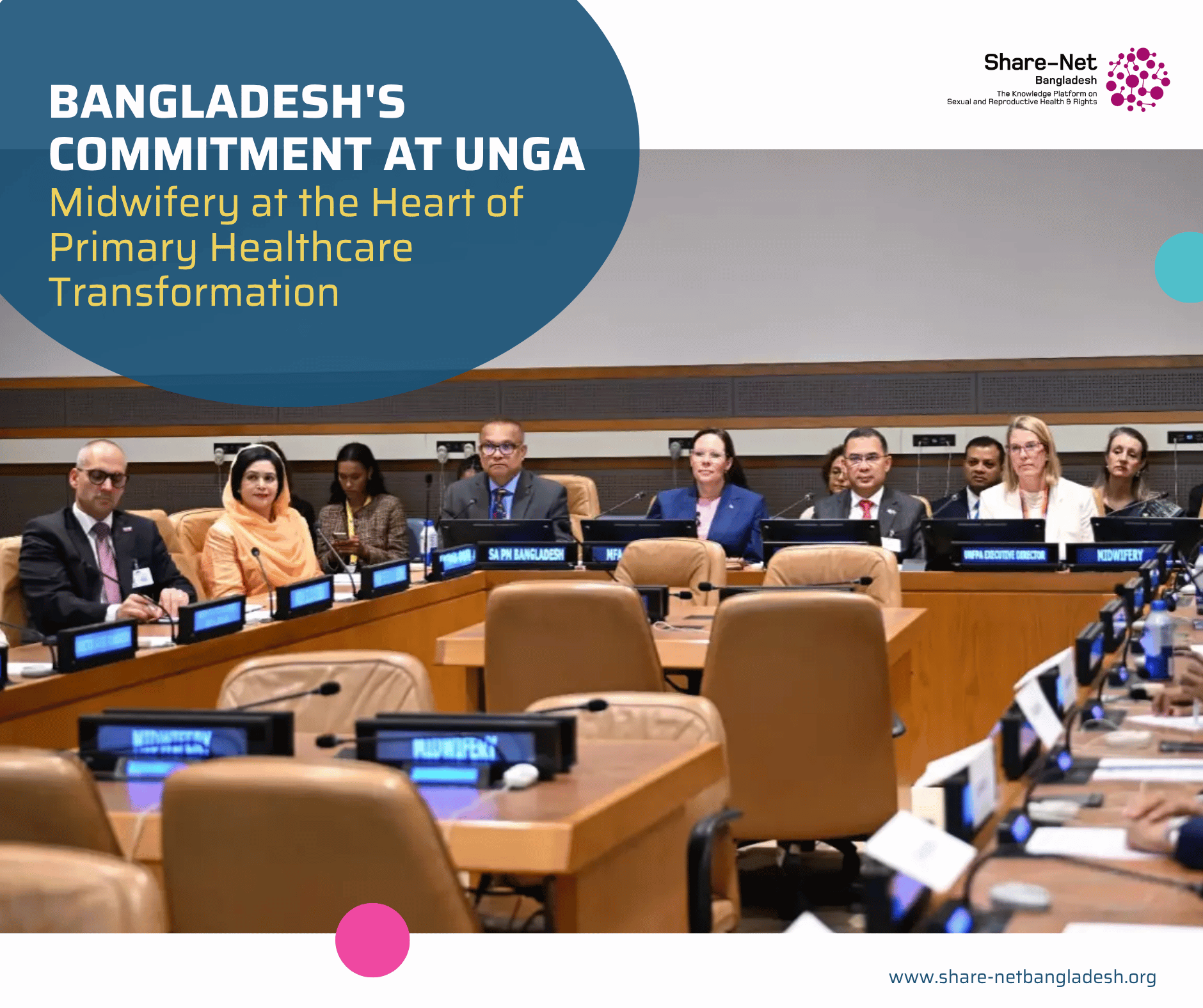
Bangladesh’s Commitment at UNGA: Midwifery at the Heart of Primary Healthcare Transformation
For women, access to skilled healthcare close to home can make a significant difference during pregnancy, childbirth and the period after birth. In Bangladesh, a renewed commitment to midwifery is placing this kind of accessible care at the centre of efforts to transform primary healthcare.
Bangladesh and Sweden, in partnership with the United Nations Population Fund (UNFPA), have reaffirmed their commitment to strengthening the role of midwives in primary healthcare and expanding access to quality sexual and reproductive health and maternal and newborn care.
The commitment came at an event held on 24 September on the margins of the 81st Session of the United Nations General Assembly. Titled “From Commitment to Action: Integrating Midwifery into Primary Health Care to End Preventable Maternal and Newborn Deaths,” the event brought together government leaders, UN representatives, civil society organisations and development partners.
A major focus was Bangladesh’s recent commitment to create 25,000 midwifery posts across its primary healthcare system. The move underscores the growing recognition of midwives as an important part of the health workforce and their role in bringing skilled care closer to communities.
Speaking at the event, Prime Minister Tarique Rahman outlined the importance of making midwifery services available to women where they live.
“Every woman should have access to a skilled professional midwife as part of her primary health care team, close to where she lives. For Bangladesh, this means deploying midwives nationwide, strengthening communities, health services and referral pathways, and connecting citizens through a modern digital health system,” said Prime Minister Tarique Rahman.
“Together these steps will help us build a healthy, thriving Bangladesh, and this is how we move from commitment to action,” he added.
The discussions also focused on midwifery education, deployment, governance and financing, while participants explored opportunities for sustained investment in the health workforce.
Sweden reaffirmed its commitment to advancing sexual and reproductive health and rights, as well as strengthening health systems and the health workforce. Sweden’s Foreign Minister Maria Malmer Stenergard said, “Investing in midwives is not only an investment in health. It is an investment in dignity, equality, opportunity and our common future.”
UNFPA welcomed Bangladesh’s commitment to creating and deploying 25,000 professional midwifery posts and highlighted Bangladesh’s role as a champion of its Midwifery Accelerator initiative.
For Bangladeshi women, strengthening midwifery within primary healthcare can have implications beyond safer pregnancy and childbirth. Midwives can serve as an important entry point to sexual and reproductive health and rights, helping women access essential care closer to their communities. With stronger referral pathways, health services and a trained workforce, the expansion of midwifery can bring SRHR services closer to women and support more accessible, timely and dignified care.