
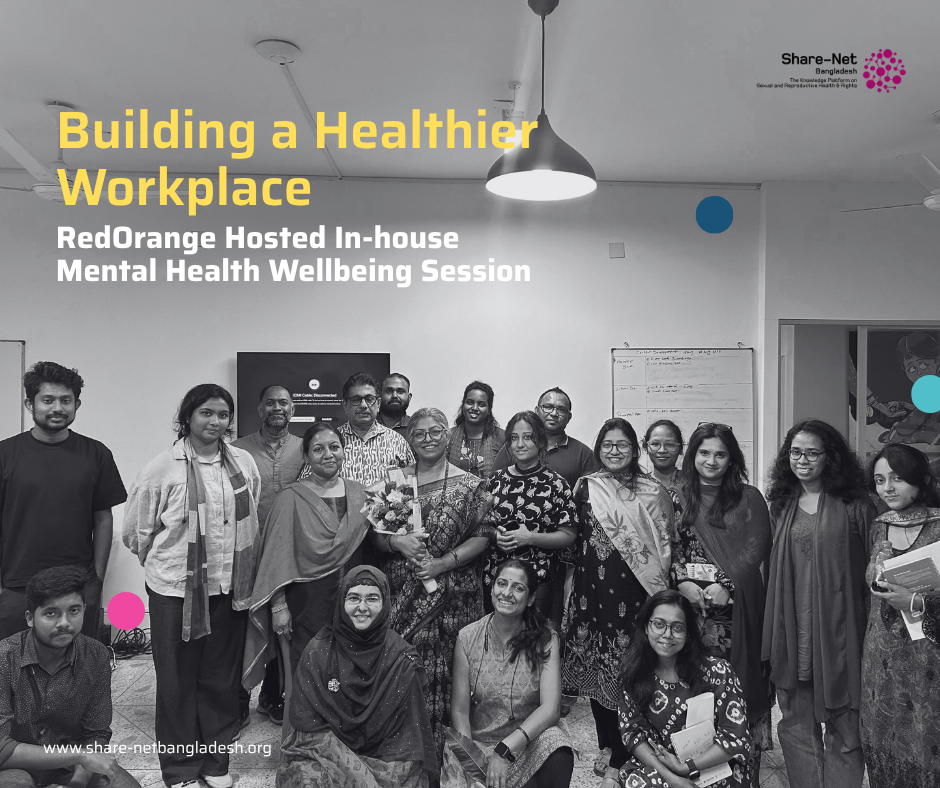
Building a Healthier Workplace: RedOrange Hosted In-house Mental Health Wellbeing Session
Mental health is often treated as a separate conversation from sexual and reproductive health and rights. But in reality, the two are closely connected. How people feel, cope, communicate, make decisions and relate to others can directly affect how they understand and exercise their health and rights.
From body image and relationships to pregnancy, contraception, gender-based violence and access to health services, SRHR is not only about physical health. It is also about having the confidence, agency and emotional wellbeing to make informed choices about one’s own body and life.
This is why conversations about mental health need to move beyond hospitals and counselling rooms. They also belong in schools, communities and workplaces.
Yesterday, RedOrange held a two-hour Mental Health Wellbeing session with Monira Rahman, Country Lead, Mental Health First Aid Bangladesh, and Founder and Executive Director of Innovation for Wellbeing Foundation. The session explored how people understand and experience mental health, why workplace wellbeing matters and, importantly, how colleagues can recognise when someone may be struggling and support one another.
The discussion offered a useful reminder that mental wellbeing is not simply about avoiding stress or feeling happy all the time. It is about having the space, support and skills to understand emotions, manage everyday pressures and seek help when needed.
The workplace is particularly important because people spend a significant part of their lives there. A workplace where stress, burnout, discrimination or emotional distress are ignored can affect people’s health, relationships, productivity and overall quality of life. On the other hand, a supportive environment can make it easier for people to speak openly, set healthy boundaries and seek support without fear of judgement.
This has a clear SRHR dimension. People cannot fully exercise their rights if they do not feel safe enough to speak, ask questions or make decisions. Mental wellbeing can influence communication in relationships, responses to violence or coercion, health-seeking behaviour and the ability to make informed decisions about reproductive health.
The session also highlighted something simple but often overlooked: colleagues can play a role in each other’s wellbeing. That does not mean becoming a therapist. Sometimes it means noticing a change, listening without judgement, checking in, respecting boundaries and helping someone find appropriate support.
For organisations working on SRHR, this connection is especially important. Advocating for healthier communities should also mean creating healthier spaces for the people doing that work.
Mental health is not an optional addition to health and rights. It is part of the foundation that allows people to live, work, relate and make choices with dignity.
And sometimes, creating that foundation starts with a simple question at work: “How are you really doing?”