
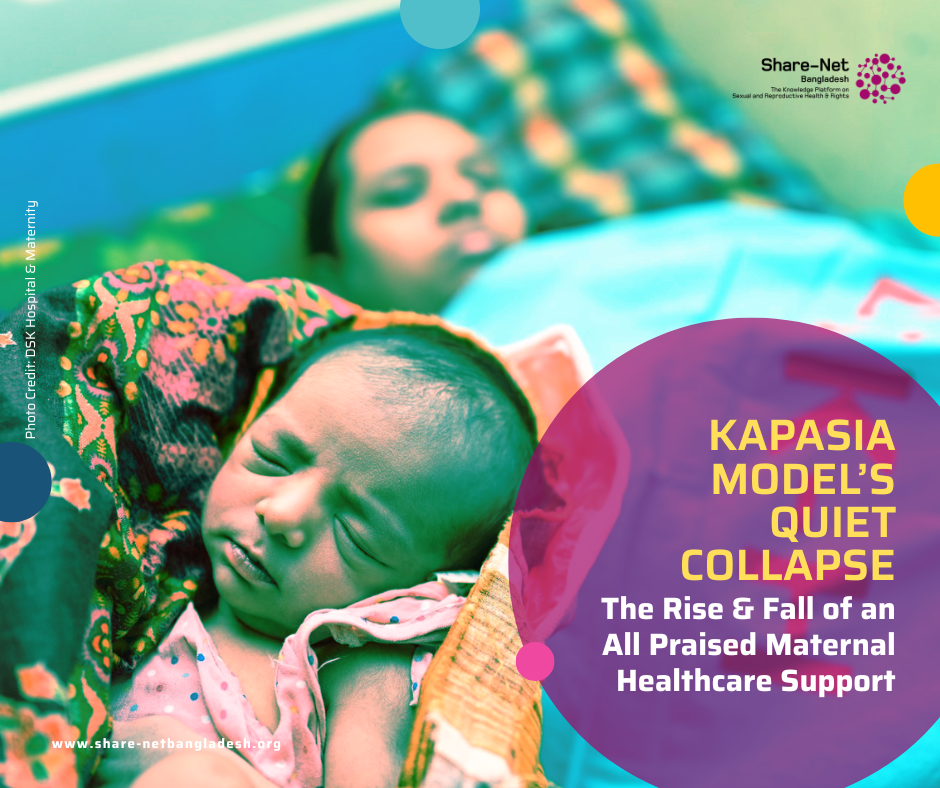
Kapasia Model’s Quiet Collapse: The Rise & Fall of an All Praised Maternal Healthcare Support
In a quiet corner of Gazipur, a system that once promised every pregnant woman a safer path to delivery is fraying. The Kapasia model, built around digital tracking, handbooks, and local clinics, had reduced maternal deaths from eight in 2017 to one in 2021. Today that progress is slipping, and the consequences fall hardest on women who need care most.
The model rested on two simple pillars: a digital registry called Gorbhobotir Ayna that flagged high-risk pregnancies and sent reminders, and a physical handbook, Gorbhobotir Goyna, that guided mothers through danger signs. Both have gone quiet. Medicine stocks of iron, calcium and vitamin B tablets ran out after limited supplies arrived in March. Vacant posts for medical officers, family welfare visitors and assistants leave clinics understaffed or locked during office hours. Peer volunteers who once reached households were let go after funding ended with the Fourth Health, Population and Nutrition Sector Programme in June 2024.
One recent case captures the human cost. A young first-time mother went into premature labour at night. Local facilities lacked emergency services. She delivered in a moving vehicle and later died from postpartum haemorrhage that her family mistook for ordinary bleeding. Officials learned of the death only when journalists asked.
This is not only a local failure. Postpartum haemorrhage remains a leading cause of maternal death worldwide, according to the World Health Organization. Anaemia, often linked to inadequate iron supplementation, raises the risk. Bangladesh has long relied on community-level tracking and skilled attendance to improve outcomes. Studies published in The Lancet and by UNFPA show that sustained community health worker programmes and reliable supplies of essential medicines cut maternal deaths when they stay funded and staffed. When those elements disappear, the gains reverse.
Sexual and reproductive health and rights include the right to safe pregnancy and timely emergency care. When night services vanish, medicines run out and monitoring systems go dark, that right becomes theoretical for the roughly 2,500 expectant mothers in Kapasia. The upazila once served as a model for 100 others and was shared by UNFPA in 27 countries. Its current state raises a larger question: can Bangladesh protect hard-won progress without steady investment in frontline staff and logistics?
Government officials speak of a new primary healthcare model with grassroots workers. Until that reaches every union, the gap between promise and practice will continue to cost lives. The Kapasia story is no longer only about one upazila. It is a warning about what happens when the systems that protect mothers are allowed to fade.