
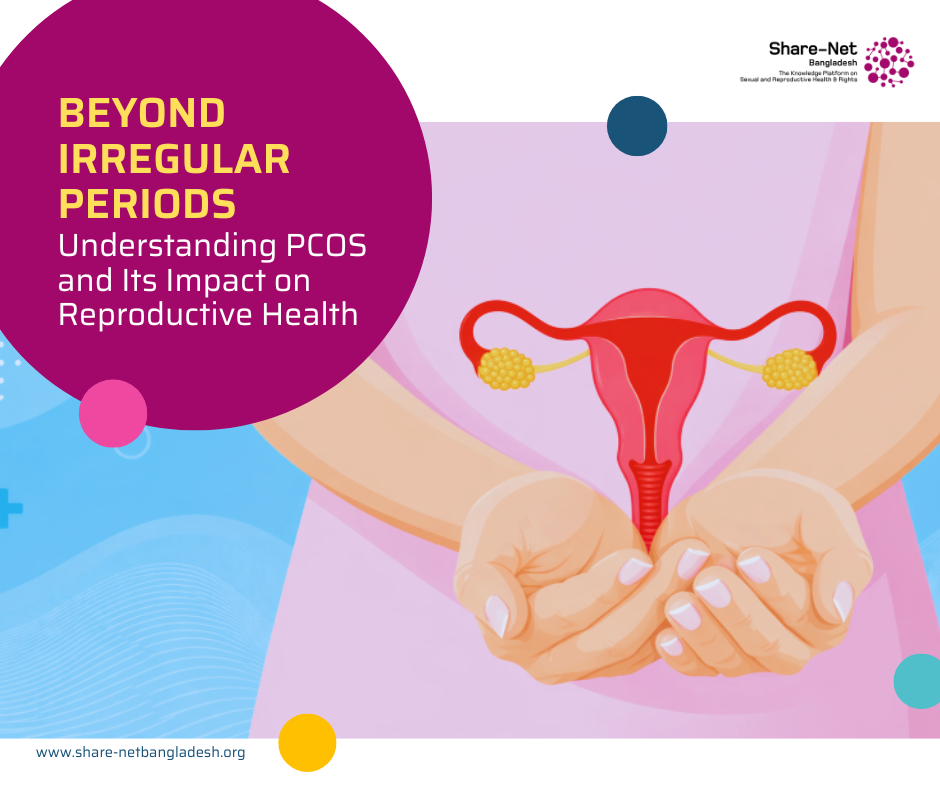
Beyond Irregular Periods: Understanding PCOS and Its Impact on Reproductive Health
A missed period is often dismissed as stress. Sudden weight gain is blamed on lifestyle. But for many young women in Bangladesh, these signs may point to something more complex — polycystic ovarian syndrome (PCOS), a condition that quietly affects reproductive health, mental wellbeing, and long-term rights to safe motherhood.
Recent data suggests that 5–15% of Bangladeshi women diagnosed with PCOS experience symptoms such as menstrual irregularities, infertility, and metabolic complications. Globally, WHO estimates PCOS affects around 8–13% of reproductive-aged women, yet up to 70% remain undiagnosed. This gap reflects a deeper SRHR challenge — limited awareness, stigma, and delayed care.
According to gynaecologist Dr Tanzeem S Chowdhury, “PCOS may develop among girls aged 16–20, especially with a family history.” This early onset places adolescents at the centre of the issue, making PCOS not just a clinical condition but a youth SRHR priority.
Understanding the Condition
PCOS is characterised by three primary features:
- Excess androgen (male hormones), causing acne and facial hair
- Irregular or absent menstruation
- Enlarged ovaries with multiple cysts
Diagnosis typically requires at least two of these symptoms, confirmed through clinical history, hormone tests, and ultrasound imaging.
However, beyond biology, PCOS reflects a broader intersection of sexual and reproductive health rights, nutrition, and gendered health access.
SRHR Implications: More Than a Medical Issue
Untreated PCOS can lead to:
- Infertility and miscarriage risks
- Diabetes and cardiovascular diseases
- Endometrial cancer due to prolonged lack of menstruation
Dr Chowdhury warns, “Prolonged lack of menstruation can thicken the endometrial lining, increasing cancer risk later in life.”
This highlights a critical SRHR concern: the right to timely diagnosis and preventive care. Without access to youth-friendly health services, many women only seek treatment after complications arise.
Mental health is another overlooked dimension. Symptoms like acne, weight gain, and hair thinning often trigger body image distress, anxiety, and social withdrawal, reinforcing stigma around women’s health.
Management and Innovation in Care
While PCOS has no permanent cure, it can be effectively managed — what experts call functional reversal.
Key interventions include:
- Balanced diet (lean protein, fibre, reduced refined carbs)
- Regular physical activity
- Weight management
- Sleep and stress regulation
Simple lifestyle changes such as walking, cycling, and yoga have shown measurable improvements in insulin resistance and hormonal balance.
Emerging research (2024–2025) also highlights:
- The role of environmental pollutants in triggering hormonal disorders
- Digital health tools for menstrual tracking and early detection
- Community-based SRHR education improving early diagnosis rates
Is the Trend Positive or Concerning?
The rising diagnosis of PCOS in Bangladesh signals a mixed reality for SRHR:
- Positive: Increased awareness, better diagnostics, and more open discussions
- Concerning: Late detection, limited adolescent-friendly services, and persistent stigma
The shift from silence to conversation is promising, but access and equity remain uneven.
Conclusion: A Call for SRHR Integration
PCOS is not just a hormonal disorder; it is a public health and rights issue. Addressing it requires integrating PCOS awareness into:
- Comprehensive sexuality education
- Youth-friendly SRHR services
- National health policies
Because behind every irregular cycle is a story of health, rights, and the need to be heard earlier.