
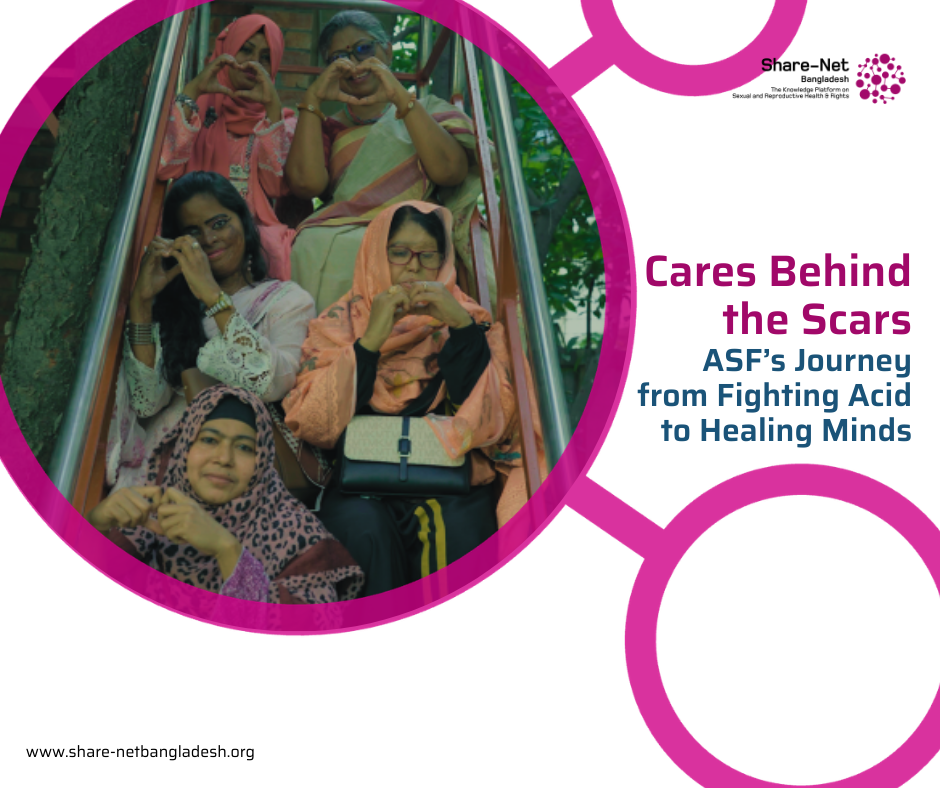
Cares Behind the Scars: ASF’s Journey from Fighting Acid to Healing Minds
There was a time in Bangladesh when acid attacks were tragically common—used as a brutal weapon of control, revenge, and gender-based violence. Faces were burned, lives were shattered, and survivors were pushed into silence. Today, those numbers have dropped dramatically. Behind this transformation is a decades-long movement led by survivors, activists and organisations such as the Acid Survivors Foundation, founded by human rights advocate Monira Rahman.
What began as a fight against a horrific form of violence has evolved into a broader mission: healing not just the body, but the mind.
Monira Rahman’s journey began in 1997 when she met acid attack survivor Bina Akter. The encounter left a lasting impression. “Her eyes were not in place, her nose was not in place,” Monira recalled later. “But I also saw an incredible spirit in her.”
At the time, acid violence in Bangladesh was rising rapidly. By 2002, nearly 500 people were attacked in a single year, with incidents increasing by around 40 percent annually. The attacks were often rooted in gender inequality—triggered by rejected marriage proposals, land disputes, or attempts to control women’s choices.
In 1999, Monira helped establish the Acid Survivors Foundation (ASF) to provide medical treatment, legal support and rehabilitation for victims. The organisation also pushed for stronger laws and social awareness. Two landmark laws—the Acid Crime Control Act and Acid Control Act of 2002—tightened regulation of acid sales and introduced harsher penalties for attackers.
The impact was significant. According to ASF data, reported acid attacks in Bangladesh fell from nearly 500 cases in 2002 to just eight incidents in 2023. This decline is widely regarded as one of the country’s most successful examples of coordinated activism, legal reform and survivor-led advocacy.
Many survivors faced trauma, depression and social isolation long after their physical injuries healed. Recognising this gap, Monira launched the Innovation for Wellbeing Foundation in 2015 to focus on mental health and emotional recovery.
The initiative promotes “mental health first aid,” teaching people to recognise distress and offer support—much like basic physical first aid. Programmes such as Mon Janala aim to break the stigma around mental illness in Bangladesh, where discussion of psychological wellbeing has long been limited.
The shift reflects a broader understanding of Sexual and Reproductive Health and Rights (SRHR). Violence such as acid attacks not only destroys bodies but also strips survivors of autonomy, dignity and social participation. Addressing mental health, therefore, is essential to restoring rights and rebuilding lives.
Bangladesh’s progress against acid violence is now cited globally as an example of effective activism. International organisations including Amnesty International and UN agencies have recognised ASF’s work.
But Monira Rahman believes the real success lies elsewhere. “When I see a person standing back up on their feet, that is my reward,” she says.
One survivor she recalls—once attacked by her own father—now studies biochemical engineering at a leading university. For Monira, that transformation captures the true meaning of justice.
Bangladesh’s journey from acid terror to survivor resilience shows that social change is possible. The next challenge, advocates say, is ensuring that healing includes not only the body—but also the mind.
Source: The Daily Star