
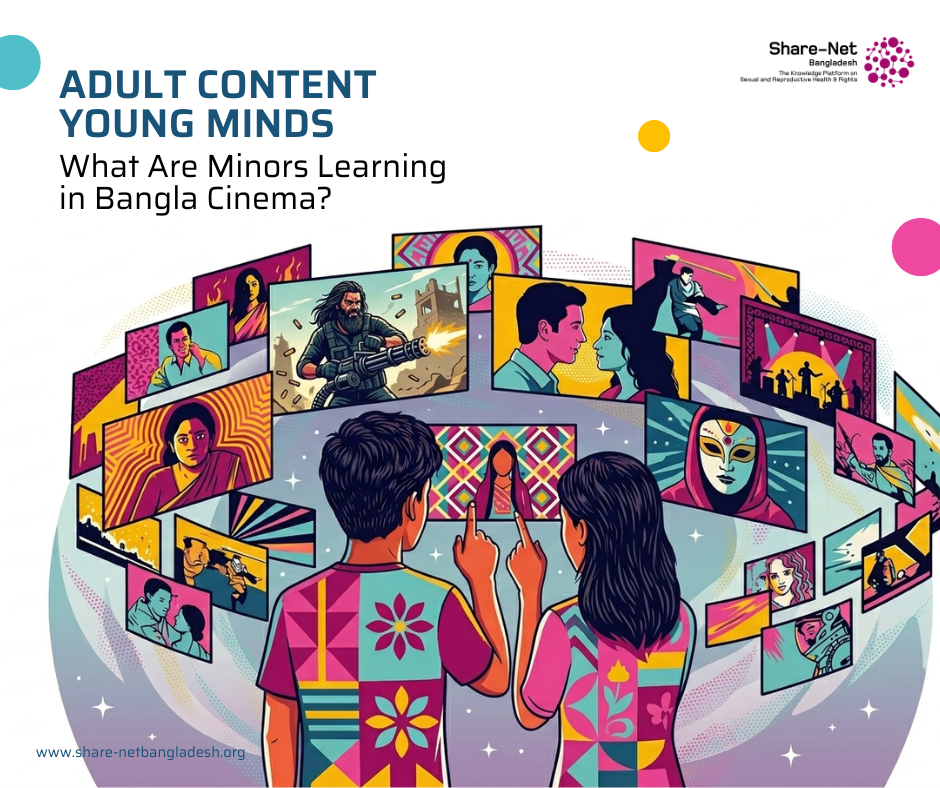
Adult Content, Young Minds: What Are Minors Learning in Bangla Cinema?
For many Bangladeshi families, Eid cinema outings are more than entertainment. They are tradition, memory, and togetherness. But when that shared experience includes adult-rated films watched by minors, the issue moves beyond leisure. It becomes a question of child development, SRHR awareness, and parental responsibility.
This matters deeply. Exposure to adult language, sexualised dialogue, or violent relationship dynamics at an early age can shape how adolescents understand consent, boundaries, gender respect, and intimacy. What children consume through cinema often becomes part of their emotional and social learning.
Mental health experts warn that premature exposure to adult themes may encourage imitation before emotional maturity develops. This does not automatically lead to harmful behaviour, but it can distort a child’s understanding of relationships and normalise unhealthy expressions of masculinity, desire, or violence.
At the same time, filmmakers argue that storytelling must evolve with global standards. Audiences already watch Netflix and other international streaming platforms at home. That is true. But globalisation should not replace contextual responsibility. The real debate is not whether adult stories should exist but whether content classification is being respected and communicated effectively.
This is where SRHR and media literacy intersect. Bangladesh’s public conversation on sexuality education often overlooks screen culture. Yet films, dialogues, and digital media now shape young people’s ideas about love, power, and bodily autonomy as much as classrooms do.
The challenge, then, is not censorship. It is literacy. Parents, theatre owners, producers, and certification authorities all share responsibility in helping families understand what is age-appropriate.
What minors learn from cinema today may quietly shape how they practice respect, consent, and relationships tomorrow. That is why film ratings are not just labels. They have a social responsibility.
