
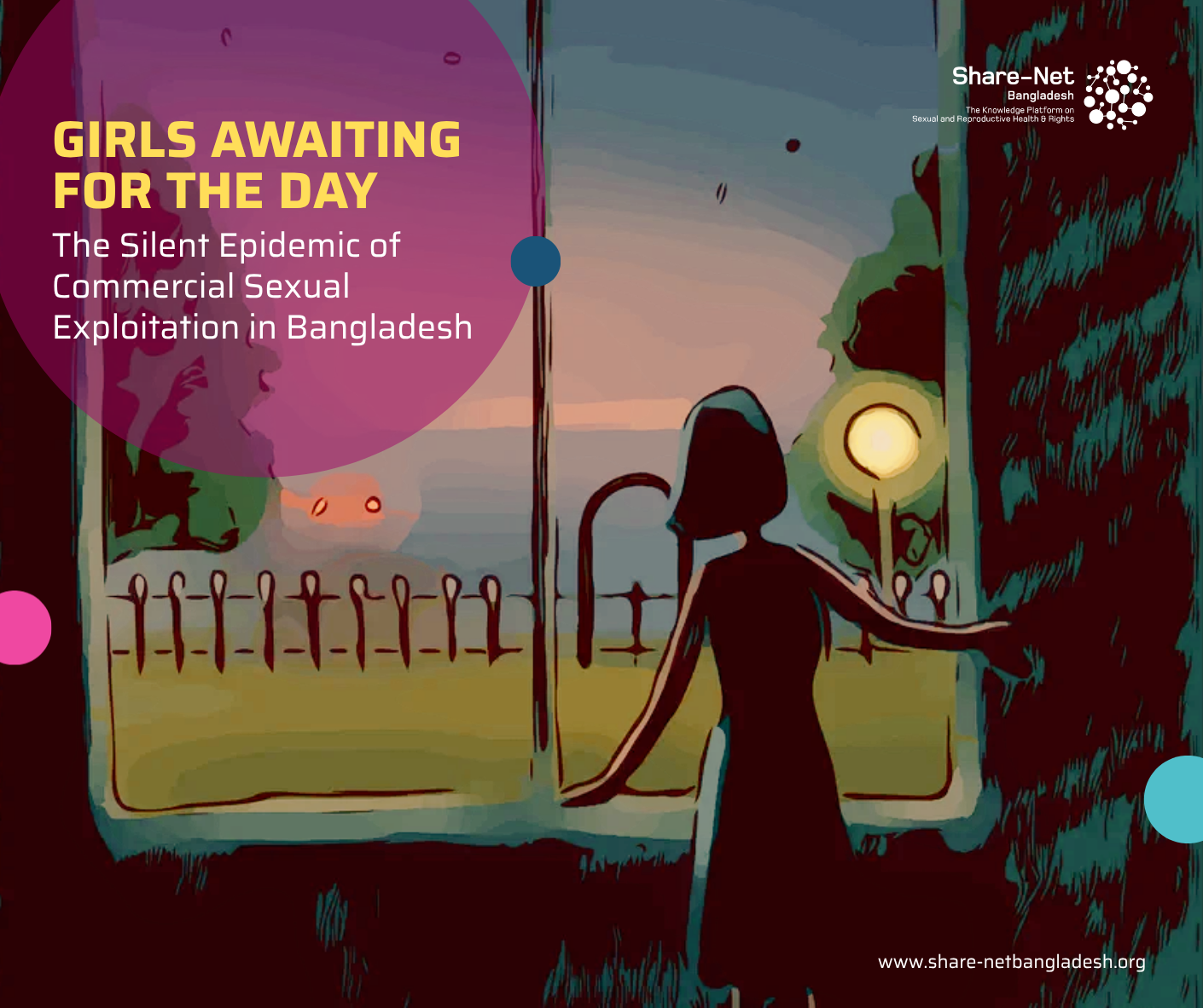
Girls Awaiting for the Day: The Silent Epidemic of Commercial Sexual Exploitation in Bangladesh
What happens when a child’s childhood is stolen for someone else’s profit? In Bangladesh, commercial sexual exploitation and trafficking continue to threaten children’s safety, dignity and future. Behind the crime are systems of deception, coercion and abuse that often leave survivors struggling to find protection and justice.
According to the 2024 Trafficking in Persons (TIP) Report by the U.S. Department of State, an estimated 30,000 girls are exploited in sex trafficking in Bangladesh. That is an estimate cited in the report, not a comprehensive national count. Traffickers exploit children in brothels, private hotels and other settings, often using false promises of employment and fabricated debts to trap them. Some girls are exploited from as young as 10 years old.
Poverty, child marriage, domestic violence and limited access to education can increase vulnerability to trafficking. The TIP Report also identifies social media and mobile messaging as increasingly used tools for luring potential victims. Yet responsibility lies with the perpetrators and the systems that allow exploitation to continue—not with the children who are targeted.
The challenge is not simply identifying victims but ensuring their safety, recovery and access to justice. The 2024 TIP Report recorded 1,210 trafficking victims identified by the Bangladeshi government in 2023, including 210 victims of sex trafficking. Civil society organisations and international bodies reported identifying another 10,135 victims across different forms of trafficking. These figures reflect reported identifications, not the total prevalence of trafficking.
The recently observed International Day of the Girl Child reminds us that every girl has the right to grow up safely, receive an education, and determine her own future. This year’s observance called for ending child marriage and increasing investment in protecting girls’ rights. However, awareness alone is not enough for children who experience sexual exploitation and trafficking. Effective investigations, prosecution of offenders, specialised shelters, psychosocial support, access to education, and long-term rehabilitation are essential. At the same time, survivors’ dignity must be protected, and they must be safeguarded against social stigma and the risk of further abuse.
Protecting girls’ rights means more than rescuing them from exploitation; it means building a society where no child has to grow up at risk of being exploited. Turning the commitments of the International Day of the Girl Child into reality requires holding perpetrators accountable, taking action against criminal networks behind trafficking, and establishing effective child protection systems. Ensuring that every girl has the opportunity to pursue her dreams in an environment free from fear and exploitation is a shared responsibility of families, communities, and the state.
Source:
