
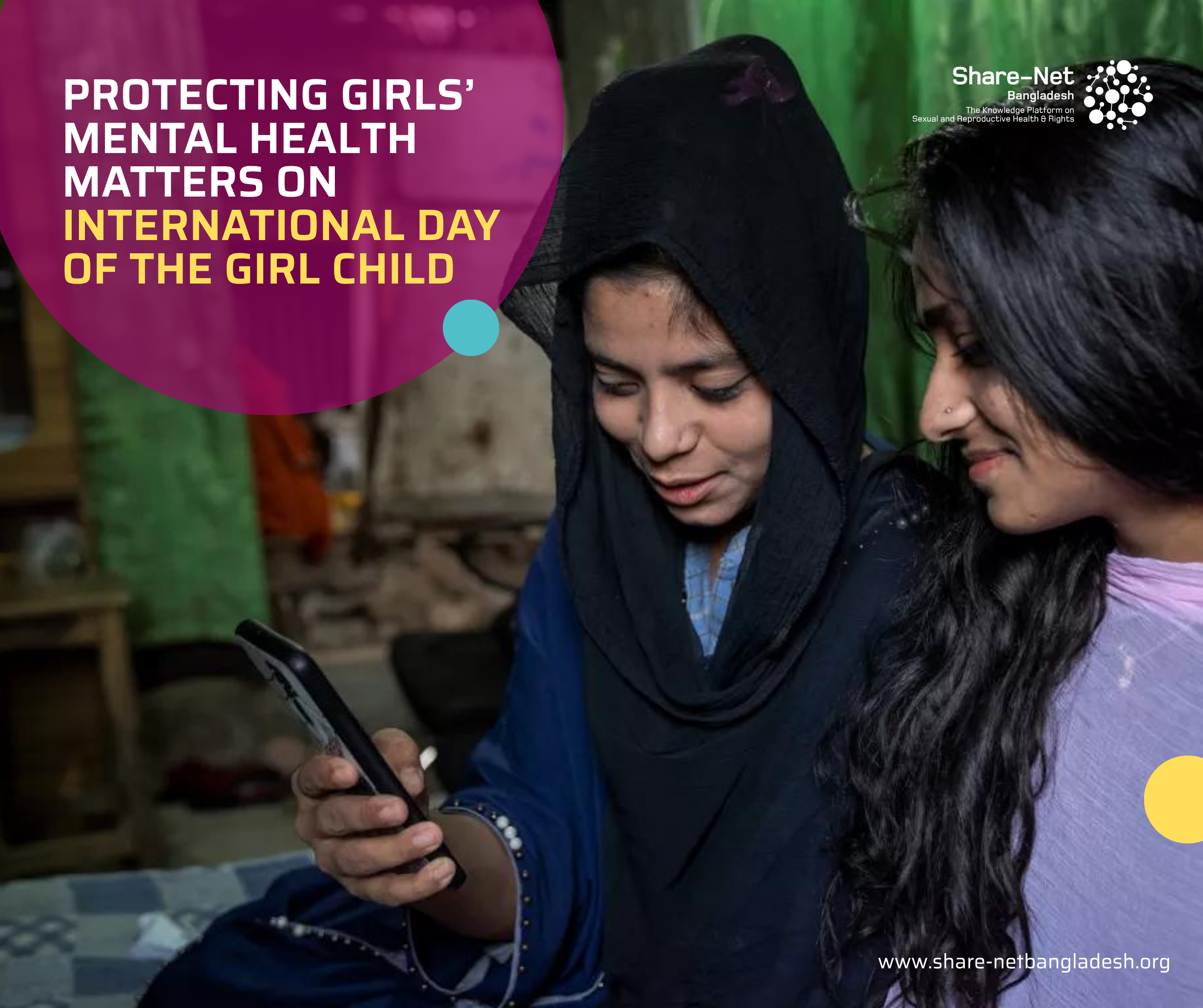
Bullied Online, Hurt Offline: Protecting Girls’ Mental Health Matters on International Day of the Girl Child
A cruel comment, a humiliating post or a threatening message can disappear from a screen without disappearing from a teenager’s life. For adolescent girls, online harassment can affect much more than their confidence. It can undermine their sense of safety, their relationships and their willingness to seek help when they need it most.
A study published in Discover Mental Health in August 2025 brings this problem into sharper focus. Analysing data from 4,984 Bangladeshi female adolescents in the Bangladesh Adolescent Health and Wellbeing Survey 2019–20, researchers found that 8% had experienced cyberbullying in the preceding year, while 12.4% had major depressive disorder (MDD). Among those reporting cyberbullying, MDD prevalence reached 31%. The researchers found a strong association between online harassment and depression, with the adjusted likelihood of MDD nearly four times higher among those who experienced cyberbullying.
The frequency of abuse also mattered. MDD prevalence increased from 23.2% among girls reporting one or two incidents to 38.2% among those reporting five or more. These findings do not prove that cyberbullying alone causes depression, but they show why repeated online abuse cannot be dismissed as ordinary teenage conflict.
Nor is the problem limited to girls. A nationwide study published in BMJ Open, involving 4,907 adolescent boys and 4,949 girls, found that depressive symptoms affected both groups, with girls generally reporting a higher prevalence across most demographic groups.
Boys may also face pressure to hide emotional distress because of expectations around masculinity. Different experiences require different responses, not less attention to either group.
The implications extend into sexual and reproductive health and rights. Online harassment involving sexual rumours, unwanted messages or the misuse of personal images can threaten privacy and dignity. Fear of humiliation may discourage adolescents from discussing relationships, consent, contraception or sexual health with trusted adults and healthcare providers. These are plausible pathways of harm, although the cyberbullying study did not directly measure SRHR outcomes.
Bangladesh already faces a serious treatment gap. The National Mental Health Survey 2019 found that 94.5% of children identified as having mental health conditions were not receiving treatment.
That makes accessible counselling, confidential reporting and supportive school environments essential. As one mental health expert quoted in the original reporting advised, victims should seek help rather than conceal their experiences. Just as importantly, families must respond without blame.
The challenge is not simply to teach teenagers to behave safely online. Schools, platforms, families and health services must share responsibility for preventing abuse and responding when it happens.
If a teenager fears being shamed for reporting online harassment, where can that teenager safely turn? And can Bangladesh protect young people’s digital rights without treating their mental and reproductive health as separate concerns?
Sources: