
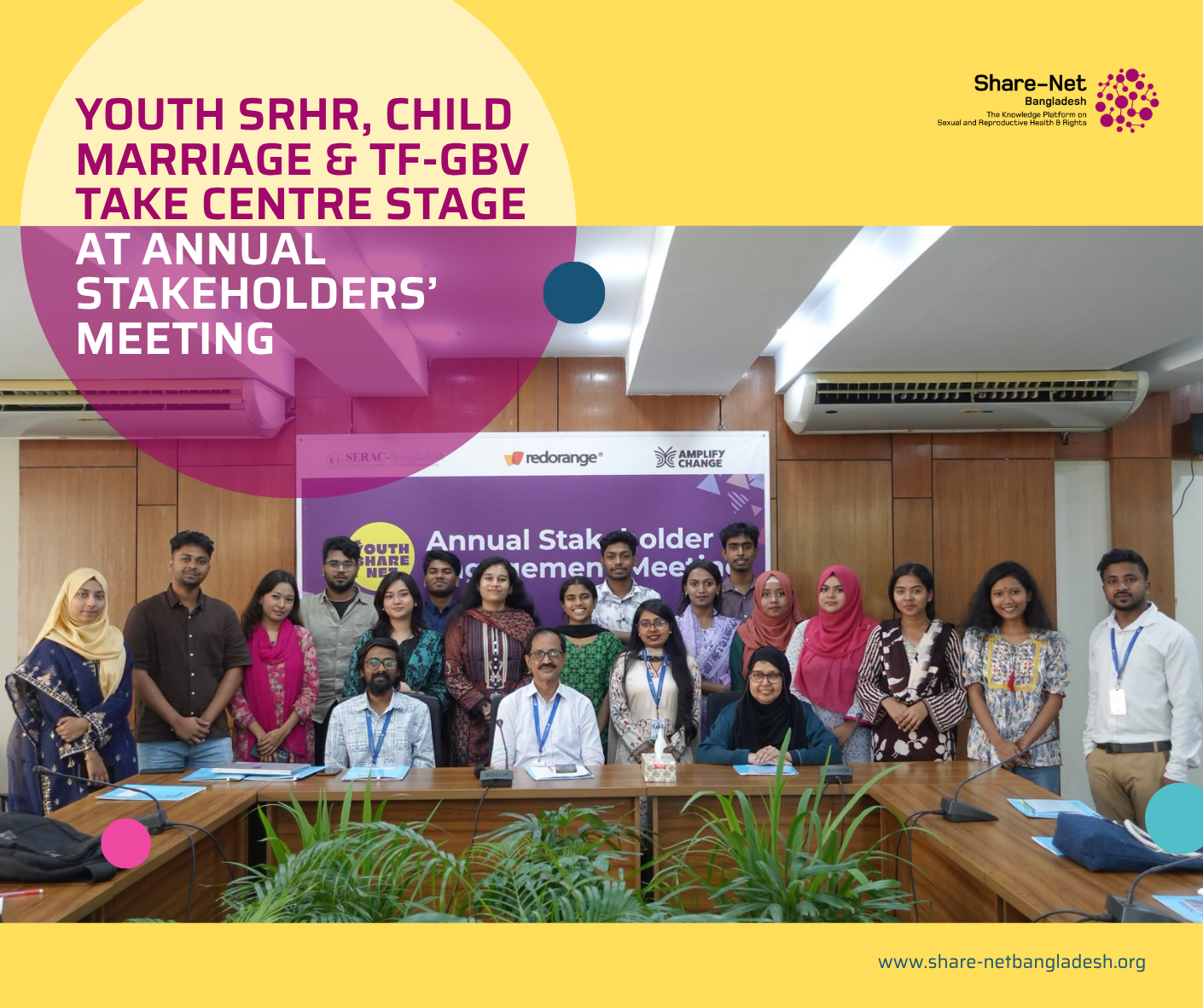
Stakeholders Call for Stronger Action on Youth SRHR, Child Marriage and Digital Safety
Strengthening collaboration among government, civil society, academia and young people will be critical to advancing adolescent and youth Sexual and Reproductive Health and Rights (SRHR), preventing child marriage and responding to emerging forms of gender-based violence in Bangladesh.
This was the key message at the Annual Stakeholder Engagement Meeting under the Youth ShareNet Project, convened by SERAC-Bangladesh with funding from AmplifyChange and support from RedOrange.
The meeting brought together senior government officials, academics, youth representatives and other stakeholders to discuss evidence, progress and priorities for advancing the rights and wellbeing of adolescents and young people.
The programme began with welcome remarks and an overview of the meeting objectives by Md. Salim Miah, Director (Program), SERAC-Bangladesh. He highlighted the importance of creating space for different stakeholders to share perspectives and identify areas for stronger collaboration.
Discussions focused on emerging challenges affecting young people, including findings from MICS 2025, the growing concern around Technology-Facilitated Gender-Based Violence (TFGBV), mental health and the need for better access to reliable SRHR information and services.
Participants noted that as young people increasingly use digital platforms for information, communication and social interaction, digital safety must become an integral part of efforts to protect their rights and wellbeing. Addressing TFGBV, they stressed, requires coordinated and gender-responsive action involving policymakers, service providers, educators, civil society and youth themselves.
An overview of the Youth ShareNet Project’s progress, achievements and advocacy priorities was presented by Md. Nazmul Hasan, Project Manager, SERAC-Bangladesh. The presentation covered key implementation milestones, evidence generation and ongoing efforts to strengthen policy advocacy and multi-sectoral engagement.
The meeting was attended by distinguished guests, including Md. Taslim Uddin Khan, Director (IEM), Directorate General of Family Planning (DGFP), and Professor Dr. Fariha Haseen, Chairman, Department of Public Health and Informatics, Bangladesh Medical University, alongside youth representatives.
The interactive discussions reaffirmed that addressing child marriage, TFGBV and mental health challenges requires sustained cooperation and meaningful youth participation. Participants called for stronger evidence-informed policies and programmes that ensure adolescents and young people can access accurate SRHR information, quality services and safer digital spaces.
The meeting concluded with closing remarks and a vote of thanks from Md. Salim Miah, who reaffirmed SERAC-Bangladesh’s commitment to youth-centred advocacy and stronger collaboration for adolescent wellbeing in Bangladesh.