
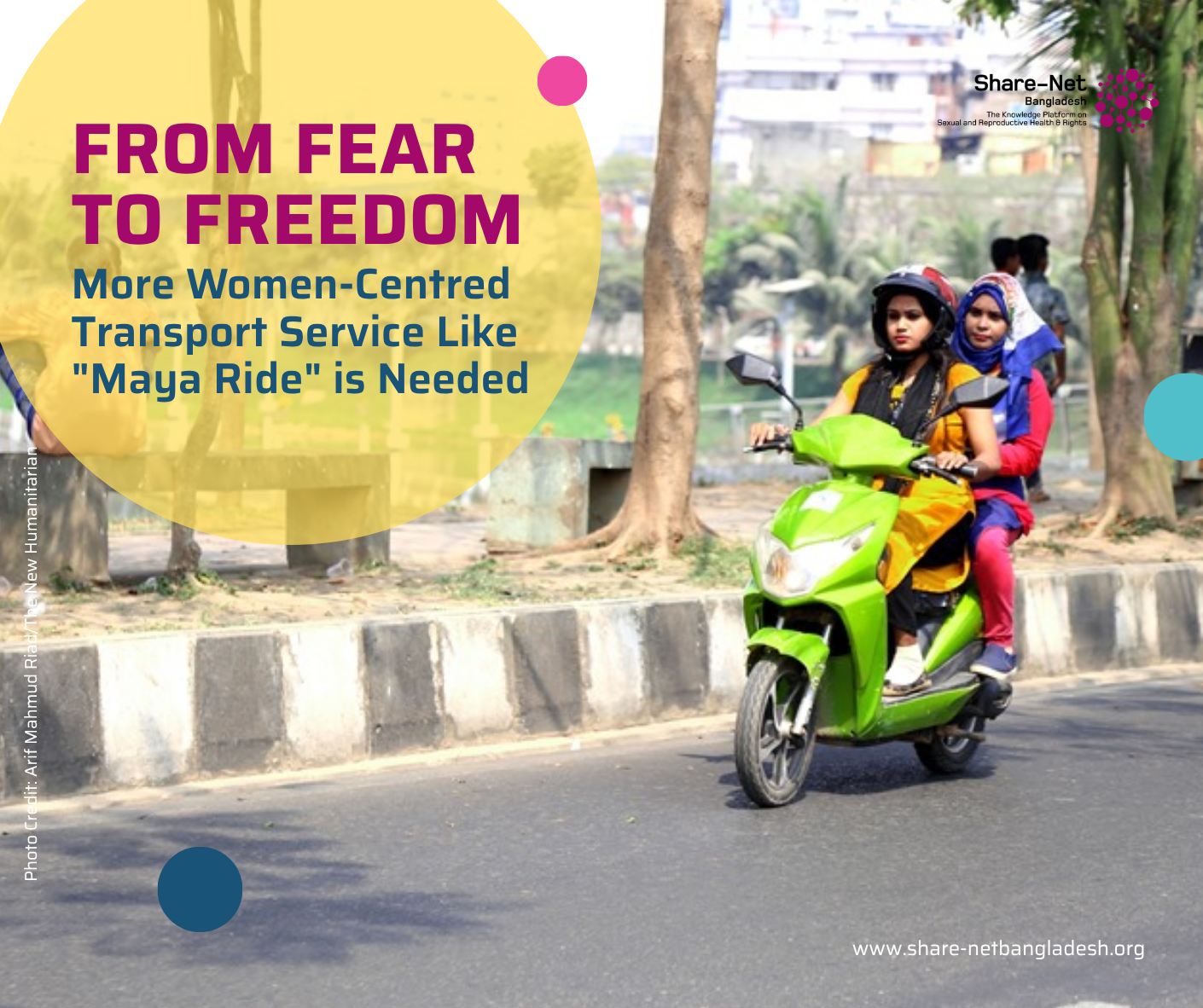
From Fear to Freedom: More Women-Centred Transport Service like “Maya Ride” is Needed
For many women in Dhaka, a journey is more than a calculation of distance, fare and travel time. It can also involve another question: Will I be safe on the way? That question can influence whether a woman accepts a job, attends a class, visits a health facility or simply goes somewhere alone.
This is where women-centred transport initiatives can offer a practical, if limited, response. Maya Ride, launched in Dhaka in 2026, connects women passengers with verified female riders and offers pre-booked women-only rides. Its services also include female car-sharing options and pre-booked school transport with female companions.
Maya Ride was founded by Dhaka-born couple Fahad Chowdhury and Jannatul Ferdous after conversations about the everyday discomfort many women experience while travelling in the city. Launched in April 2026, Maya Ride now connects women passengers with verified female motorcycle and car drivers, while also offering pre-booked transport for school-going children. Within four months, around 70 female motorcycle riders had joined the platform, with more than 300 rides completed.
Maya Ride is part of a wider shift in Bangladesh’s transport conversation. BRTC’s Pink Bus Service, launched in August 2026, introduced women-only buses operated by female drivers and conductors on selected routes in Dhaka and other cities. Meanwhile, Uber’s partnership with Better Future for Women has supported efforts to bring more women into ride-sharing as drivers, showing that mobility can be both a safety issue for passengers and an employment opportunity for women.
Together, these initiatives point to a broader question: should women have to find separate transport options to feel safe, or should safety become a basic feature of Bangladesh’s entire transport system?
A World Bank study on women’s mobility in Dhaka found that women across income groups reported feeling unsafe on public transport and while walking at night. Harassment on public transport was a recurring concern, while lower-income women also identified overcrowding and affordability as major barriers.
Another World Bank analysis cited a 2022 survey of more than 5,000 women across 24 districts, in which 87% reported experiencing harassment at least once. Thirty-six percent said they regularly faced sexual harassment on public transport, while 57% considered public transport the most unsafe public space among those covered by the survey.
These figures matter to the sexual and reproductive health and rights conversation because mobility is closely tied to autonomy. A woman who avoids certain routes, times or modes of transport because of harassment has less freedom to access education, employment, healthcare and social services.
Its significance is not simply that women may feel more comfortable travelling with women. The model also creates opportunities for women to enter paid driving work. Recent reporting says the platform grew from four riders to around 70 within four months, with about 30 active riders, while more than 300 motorcycle rides had been completed.
Still, women-only transport should not become a substitute for fixing public transport. A segregated solution can reduce exposure to particular risks, but it cannot by itself change the behaviour, infrastructure and accountability systems that allow harassment to persist.
As the idea behind women-centred mobility suggests, “safety, dignity, comfort and choice” should not be premium features of urban life. They should be basic conditions for women’s equal participation in the city.
